Blog

  • Rebuild Britain Vs Local Planning: What Changes For Single‑storey Rear Extensions?

    Rebuild Britain Vs Local Planning: What Changes For Single‑storey Rear Extensions?

    Reforms to the National Planning Policy Framework have brought more convenience to homeowners by simplifying the approval process for single-storey rear extensions—such as kitchen-diners and bi-fold door installations. However, it’s crucial to understand that although planning permissions are more accessible, they do not eliminate the requirement to comply with essential Building Regulations.

    Compliance with Building Regulations Remains Essential

    While the route to planning approval may be quicker under updated guidelines, homeowners must still ensure that any extension—no matter how minor—meets the requirements of Building Regulations, particularly Part A, which governs structural safety and stability.

    Key Areas to Focus On

    • Permitted Development Rights (PDRs): These simplified planning policies allow certain works without needing full planning permission, but they only address planning—not construction integrity.
    • Part A of Building Regulations: This part is concerned with the structural strength of buildings, especially when making alterations such as removing or modifying load-bearing walls.
    • Use of Qualified Professionals: Employing a structural engineer ensures proper load calculations and beam sizing for features like knock-throughs and rear extensions.
    • Size Limits and Structural Impact: Even if your extension fits the permitted size (up to 4 meters for detached homes, 3 meters for others), you’ll still need comprehensive structural assessments.
    • Budget for Safety: Including costs for professional services—such as structural engineering and Building Control approvals—is critical to a safe and regulation-compliant project.

    Why Structural Design Cannot Be Overlooked

    Features like expansive kitchen-diners and bi-fold doors impact the load distribution in a house. To ensure long-term structural success and to avoid costly failures, homeowners must work with skilled professionals and adhere strictly to structural guidelines mandated by Building Regulations.

    For detailed guidance on Permitted Development Rights and what is included, refer to the official technical guidance on PDRs.

    The Critical Misconception: Permitted Development Does NOT Mean You Can Skip Structural Safety

    National reforms such as those introduced in the National Planning Policy Framework have relaxed planning rules, enabling certain home improvements—like single-storey rear extensions—to be approved more swiftly under Permitted Development Rights (PDRs). Projects like rear kitchen-diners and installing bi-fold doors now require less bureaucracy when fitting within prescribed limits.

    However, these relaxed permissions under PDRs do not exempt homeowners from adhering to Building Regulations. Structural elements—especially knock-throughs involving load-bearing walls—still require precise engineering to ensure the safety and integrity of the home.

    Homeowners commonly mistake PDRs as a green light to bypass professional oversight. This misunderstanding introduces serious risks. It’s essential to recognize that PDRs apply solely to planning approval. They do not negate Building Regulations, which are in place to uphold structural safety.

    As an example, Schedule 2, Part 1, Class A of The Town and Country Planning (General Permitted Development) (England) Order 2015 (as amended) permits:

    • Single-storey rear extensions up to 4 metres deep for detached houses
    • Up to 3 metres deep for semi-detached or terraced houses
    • Max height of 4 metres, reduced to 3 metres at the eaves when within 2 metres of a boundary
    • Use of materials that match the existing house
    • Placement at the rear elevation

    Even larger extensions made permissible temporarily (up to 8 metres for detached or 6 metres for others) still imposed the same structural obligations. Homeowners must not mistake size exemptions as safety exemptions. Constructing rear kitchen-diners or adding expansive glass doors without proper engineering places the property at risk of structural collapse.

    According to Approved Document A – Structure, all structural changes must demonstrate compliance. Only qualified structural engineers can properly design the necessary beams and supports to manage new load paths created during alterations.

    Essential Criteria and Fees for Permitted Extensions

    A rear extension qualifies under PDR if it:

    1. Stays within the 4-metre depth for detached homes (or 3 metres for others)
    2. Uses materials similar to those of the existing building
    3. Is positioned strictly at the rear elevation

    Even for extensions that comply with PDR criteria, structural safety assessments remain critical. I recommend hiring a structural engineer early in the design stage. Their expertise ensures that load-bearing elements are adequately supported when creating openings for features like bi-fold doors or open-plan spaces.

    Building Control fees, typically ranging from £500 to £1,000, cover plan assessments and site inspections. These fees support the review of construction safety, reinforcing the importance of professional compliance even when planning laws are relaxed.

    In summary, national reforms simplify the planning process but do not affect safety regulations. Prioritize structural design to ensure your extension stands the test of time and avoids costly repairs.

    https://www.youtube.com/watch?v=Q6fAAJkXTng

    Why RSJs, Padstones and Structural Calculations Are Mandatory for Your Rear Kitchen-Diner Opening

    I often encounter rear kitchen-diner openings that involve large-scale changes like installing bi-fold doors or removing entire walls. These modifications demand structural integrity, so elements such as RSJs, padstones, and professional calculations become non-negotiable. Let’s break down why each component plays a vital role in ensuring your project succeeds without endangering the home or the people inside it.

    RSJs, or rolled steel joists, provide the backbone for supporting loads above large openings. Timber or pre-stressed concrete lintels serve similar purposes. I always recommend specifying the right size because undersized beams deflect over time, causing noticeable cracks or even catastrophic failure if unchecked. Proper sizing prevents these issues, but only a detailed calculation confirms the best choice. Timber options offer flexibility for lighter loads, while RSJs excel in heavy-duty scenarios, often costing between £300 and £800 for a 3m span.

    Essential Support Systems for Structural Stability

    Padstones distribute concentrated loads from beams into the masonry walls. Without them, or if you install incorrectly sized ones, the walls crush or crack under pressure. Each padstone typically ranges from £50 to £150, a small investment that averts major headaches. I ensure my projects include padstones with suitable supports at beam ends, matching the masonry strength to avoid failure points.

    Failing to prop the structure temporarily during construction adds huge risks. Inadequate Acrow props can collapse, creating immediate danger. I supervise propping to keep everything secure until the permanent supports take over.

    The Role of Professional Expertise

    A Chartered Structural Engineer from institutions like MIStructE or FStructE offers expertise here. They produce calculated and signed designs covering foundations, beams, roofs, and more, all aligned with Building Control standards. Fees run from £800 to £2,500 plus VAT, varying by project scope. Skipping this step means relying on guesswork, which invites structural failure and costly repairs. I prioritize these engineers to deliver safe, compliant results every time.

    These requirements hold even as national reforms ease planning for rear extensions. Building Regulations Part A enforce them, guaranteeing your home withstands everyday demands and external pressures.

    Foundation Design and Ground Conditions: The Hidden Risks That Will Crack Your Extension and Your Original House

    I examine how national reforms to the National Planning Policy Framework and permitted development align with local plans, revealing implications for rear kitchen-diners, bi-folds, and structural knock-throughs. Even as planning rules loosen, Building Regulations Part A demands careful attention. Effective beam design remains crucial to avoid catastrophic failures.

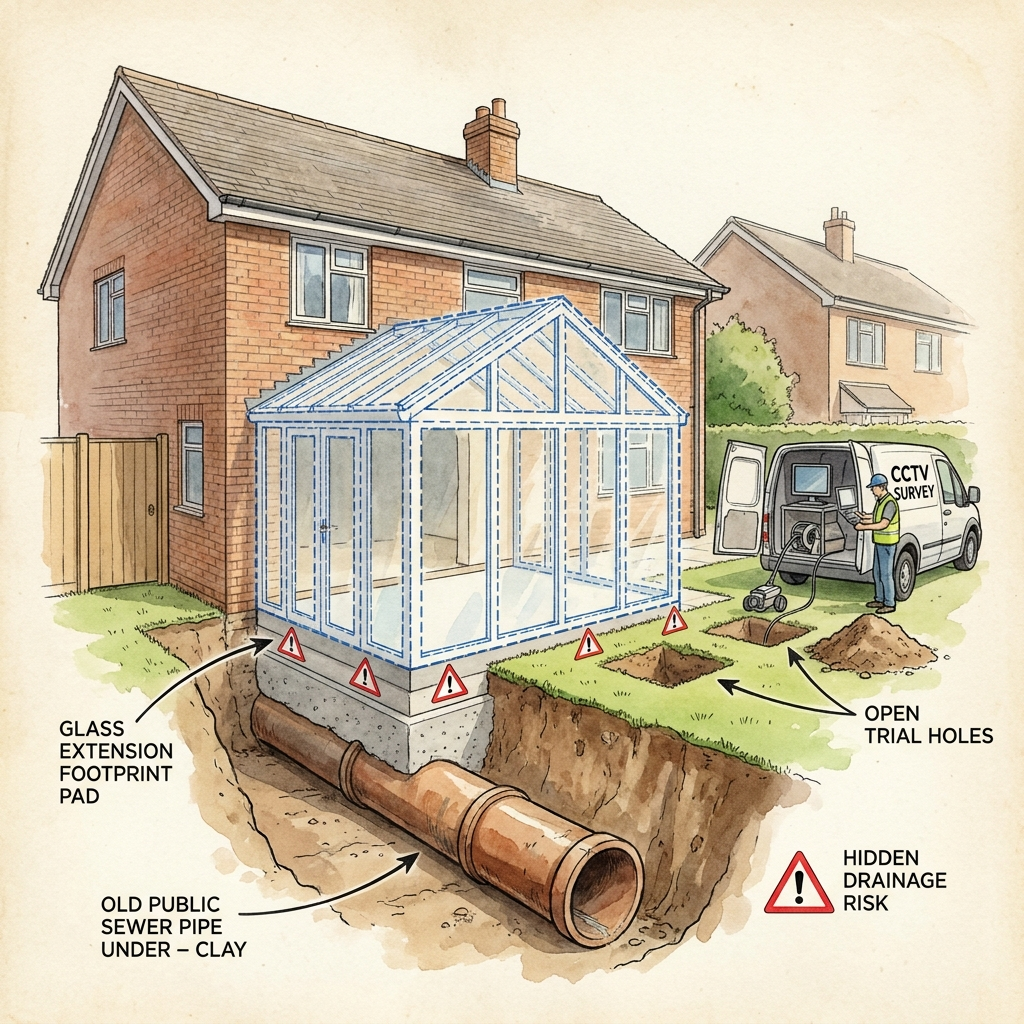
    New single-storey rear extensions require solid foundations like strip or trench-fill types made from reinforced concrete to spread loads evenly. These support the structure without causing undue stress on the ground. Ignoring poor soil conditions leads to serious issues. Where the soil proves inadequate, pile foundations often become necessary. This prevents the extension from sinking unevenly.

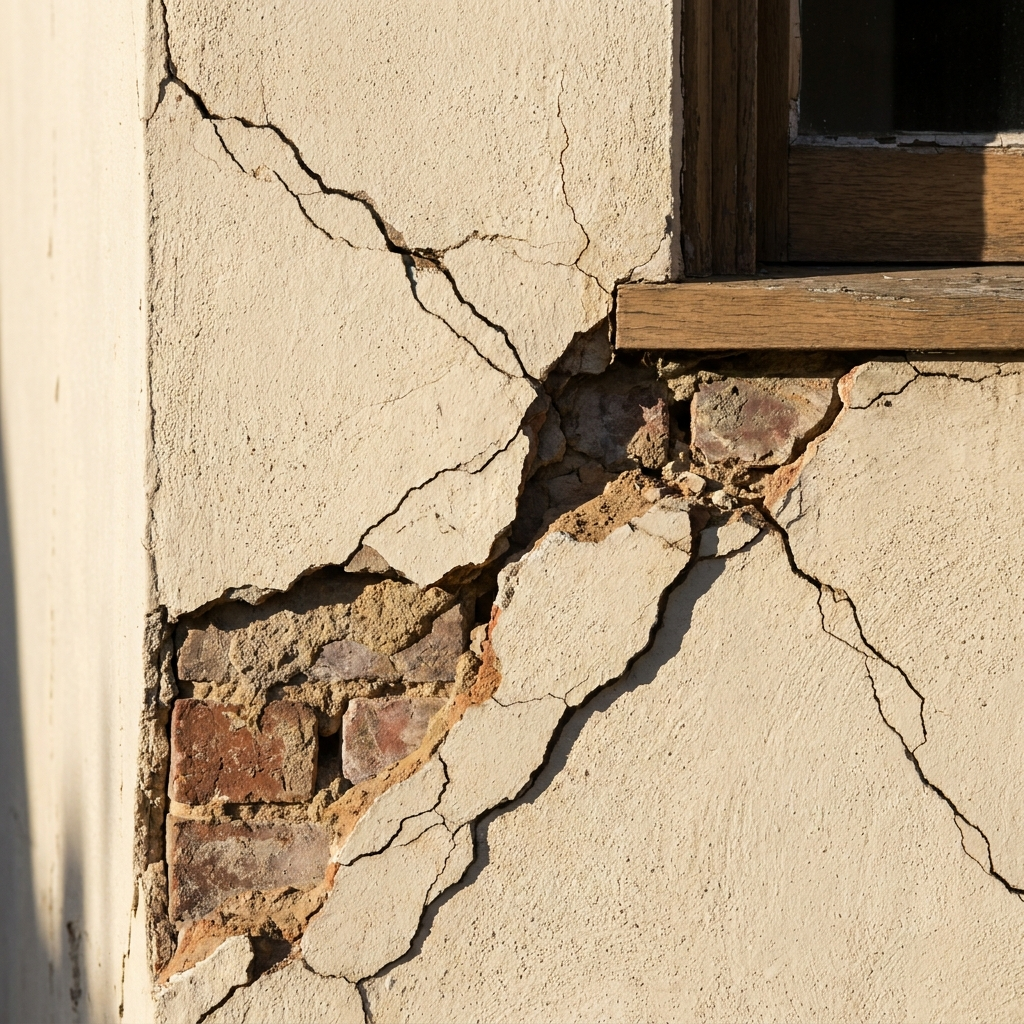
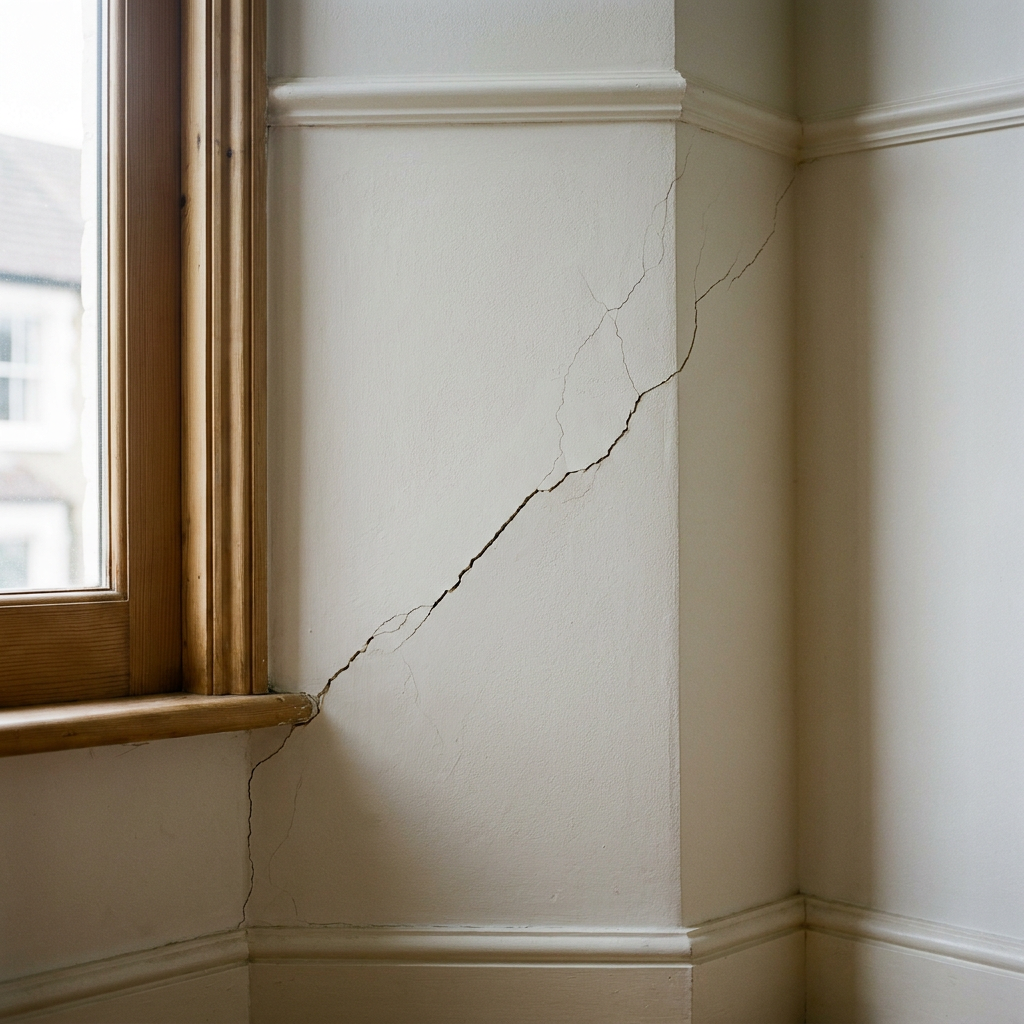
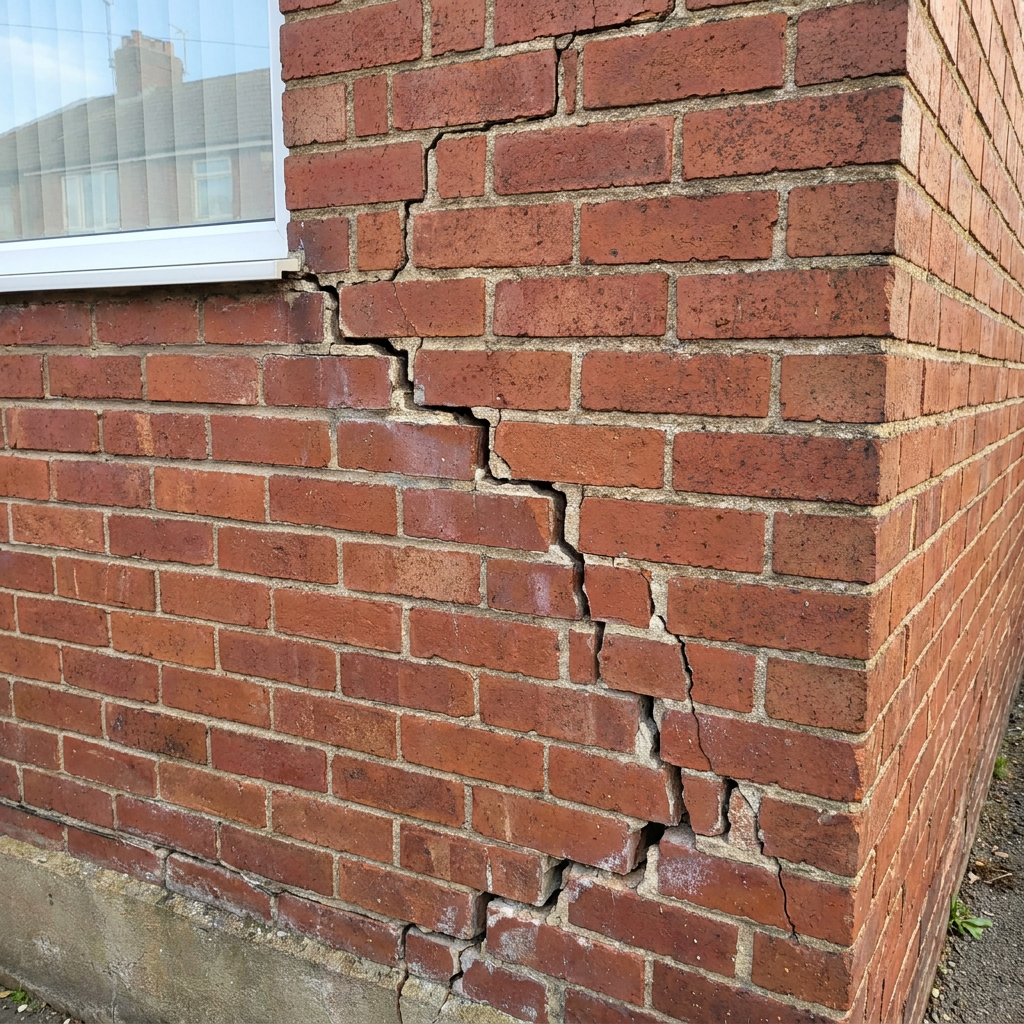
    Incorrect foundation design triggers differential settlement, particularly when the new foundations fall within the 45-degree influence zone of the existing house’s foundations. Such misalignment causes masonry cracking in both the new extension and the original structure. Users encounter visible signs like cracked walls and uneven floors, which compromise safety. I recommend consulting a structural engineer early. They assess site conditions and design appropriate foundations. Specialists ensure compatibility between old and new.

    Poorly matched foundations for specific soil types result in excessive settlement or even collapse. Clay soils pose particular risks, as they swell and shrink with moisture changes. Nearby trees exacerbate this, potentially causing heave or subsidence if not considered. Tree roots draw moisture from the soil, leading to foundation movement. Avoid planting large trees close to your extension. Existing mature trees demand evaluation during planning.

    Standard foundation costs range from £800 to £1,500 per linear metre, adding up to £5,000 to £9,000 for a 12m² extension. These figures vary by location and soil complexity. Budget for these as a core expense. Cutting corners here invites costly repairs later.

    A strong connection between the new extension and the existing house structure prevents instability. Poor detailing invites differential movement and cracking at the junction. I advise using reinforced concrete beams or steel ties for seamless integration. These elements distribute loads and resist shifts.

    Key Considerations for Excavations

    Excavations for foundations must stay stable and shored to avoid collapse during construction. Working in tight spaces near existing structures heightens risks. Trenches can cave in without proper support. Hire certified professionals for shoring. They use hydraulic props or trench boxes to secure sides.

    Properly connecting and designing new structures boosts safety and durability for both the extension and the original home. This focus maintains integrity across the property. Users gain peace of mind with expert oversight. I ensure designs meet Building Regulations, guarding against hidden pitfalls like those from relaxed planning regimes. Even relaxed rules for rear additions don’t exempt builders from solid engineering principles. Bi-fold doors and kitchen-diners benefit from this foundation strength, remaining functional over time. Structural knock-throughs, meanwhile, depend on these beams to bridge old and new without compromise.

    I tailor solutions to regional variations, balancing national reforms with local plan specifics. Always prioritize Part A compliance. This approach prevents planning shortcuts from undermining structural soundness. Users avoid disputes by documenting all decisions. Foundations form the bedrock—get them right from the start.

    Party Wall Act 1996: When Your Extension Requires Neighbour Agreements and What It Costs

    I assess the Party Wall etc. Act 1996 closely when planning single-storey rear extensions. This legislation comes into play if your project touches or gets close to a shared wall, your neighbor’s foundations, or crosses a boundary line. You’ll need a Party Wall Award to proceed legally.

    The Act demands that property owners serve formal notices on neighbors who might be affected. These notices outline the proposed work and give neighbors a chance to respond. If they agree, you move forward smoothly. But missed notices or disagreements can lead to disputes. Neighbors might claim damages for any issues arising from the build. In worst-case scenarios, they could seek injunctions that stop your extension in its tracks.

    To handle notifications professionally, I recommend hiring a Party Wall Surveyor. This expert mediates between you and your neighbors. Budget at least 12 weeks for the process to avoid delays.

    Key Scenarios for Party Wall Involvement

    Your rear extension might require a Party Wall Award in these situations:

    • You’re excavating within 3 meters of a shared boundary or interfering with neighboring foundations.
    • The works involve underpinning an existing party wall or rebuilding it.
    • You’re constructing new walls across boundaries or on border lines.

    Understand that even small extensions can trigger this if they breach those limits. I advise checking with a surveyor early to confirm risks and compliance.

    Surveyor Fees and Financial Impact

    Costs vary based on surveyor involvement:

    1. One surveyor handling both sides often charges £1,000 to £1,800 for a job. This setup saves money and minimizes conflicts. Opt for it if possible.
    2. When each party selects their own surveyor, expenses climb. Each neighbor pays their surveyor’s fees, totaling £1,500 to £3,000 or more per party. These figures include surveys, agreements, and site visits.

    Factor in potential extras like legal fees if disputes arise.

    Always plan for these costs upfront. They represent a significant expense in extension budgets. I ensure clients account for them during initial consultations to prevent surprises.

    Real Build Costs for 2025: Materials, Labour and Why Professional Fees Are Non-Negotiable

    I analyse how national reforms to the National Planning Policy Framework and permitted development interact with local plans. These changes simplify permissions for rear kitchen-diners, bi-folds, and structural knock-throughs. Yet, even with relaxed planning, Building Regulations Part A and careful beam design remain critical. You must verify structural integrity to avoid future problems.

    All these costs are approximate and exclude VAT, varying by location, ground conditions, specification, contractor availability, and project complexity. Always include a 10–15% contingency for unexpected surprises.

    Estimated Build Costs Per Square Metre

    Build costs per square metre for a single-storey rear extension rise based on the finish level:

    • Basic spec: £2,000 to £2,800 + VAT with standard finishes
    • Mid-range spec: £2,800 to £3,500 + VAT with higher quality finishes and more complex structure
    • High-end spec: Exceeds £3,500 + VAT for premium or intricate designs

    Typical Breakdown for a 12m² Extension

    For a 12m² extension, expenses might divide like this:

    • Masonry components: £3,000 to £6,000
    • Roof structure: £1,500 to £3,000
    • Windows and doors: £3,000 to £8,000+
    • Internal finishes: £6,000 to £12,000

    Labour Costs

    Labour represents 50–60% of total costs, bringing these figures to life. Below are typical daily rates:

    • Builders or groundworkers: £200–£350 per day
    • Bricklayers: £200–£300 daily
    • Carpenters and roofers: £200–£400 per day
    • Electricians and plumbers: £250–£400 each day
    • Plasterers: £200–£350 daily

    I recommend hiring skilled professionals to meet deadlines and maintain quality standards.

    Professional Fees: A Non-Negotiable Investment

    You cannot skip professional fees—they ensure safety and compliance. Architects or designers typically charge between £800 to £3,000+ depending on the scale. These investments prevent costly errors later. I stress allocating that 10–15% contingency for issues that pop up during construction. This approach keeps your project on track.

    What Happens When You Ignore Building Regulations: Enforcement, Insurance and Selling Nightmares

    I always stress how national reforms reshape the National Planning Policy Framework, loosening permitted development rights to boost home extensions. This interacts with local plans, offering homeowners more freedom for single-storey rear projects like kitchen-diners and bi-folds. Yet, even with these changes, Building Regulations Part A demands full compliance, insisting on solid beam designs and structural integrity. Skirt these rules, and you court disastrous outcomes.

    Local Authority Building Control or an Approved Inspector often steps in with enforcement notices. These require immediate fixes or, in extreme cases, demolition. Buyers reject properties without proper sign-off documents from solicitors, since lenders demand them before mortgages. Insurance companies void policies upon discovering unregistered alterations, leaving you exposed to hefty claims.

    Go beyond permitted development limits—for instance, stretching size, height, or using mismatched materials—and the build turns unlawful. Local planning enforcement can shut you down. Structural mishaps loom large without regs.

    Key Structural Failure Risks

    • Faulty load-bearing setups cause walls to bulge or crumble.
    • Roof timbers that are too thin or poorly placed sag under weight, risking collapse.
    • Weak joints create unstable nodes throughout the structure.
    • Unbraced roofs fail fast against wind or snow loads.

    In short, bypassing regs invites financial drains, legal battles, and severe safety threats. Even relaxed planning shifts can’t override these basics; get solid advice early to avoid pitfalls.

    For more details about permitted development rights and compliance, visit the official UK Government technical guidance.

    https://www.youtube.com/watch?v=aEwGcyJRAf0

    Sources:
    Planning Portal – “https://www.planningportal.co.uk/”
    UK Government – “The Town and Country Planning (General Permitted Development) (England) Order 2015”
    UK Government – “Structure: Approved Document A”
    UK Government – “Fire Safety: Approved Document B”
    UK Government – “Site Preparation and Resistance to Contaminants and Moisture: Approved Document C”
    UK Government – “Conservation of Fuel and Power: Approved Document L”
    UK Government – “The Party Wall etc. Act 1996”

  • House Extensions 2.0: Why Councils And Lenders Are Getting Tougher On Beam Calculations And Paperwork

    House Extensions 2.0: Why Councils And Lenders Are Getting Tougher On Beam Calculations And Paperwork

    Councils and mortgage lenders are heightening their focus on the structural elements of home extensions, specifically RSJs (Rolled Steel Joists) and padstones, due to rising concerns over unregulated alterations and the resulting financial implications.

    Key Takeaways

    • Increased Scrutiny: Both councils (via Building Control) and mortgage lenders are now requiring more thorough proof of structural safety and proper installation in house extensions.
    • Structural Engineer Essential: It is vital to engage a qualified Chartered Structural Engineer at the earliest stage of the project to handle design, calculations, and ensure adherence to UK building regulations.
    • Significant Cost Beyond the Beam: Budgeting should go beyond just the physical RSJ; consider professional fees (engineers, Building Control inspections), party wall surveyor fees, and material costs.
    • Documentation is Key: Maintain a complete record of all structural certificates and documentation. These should be organised into a sales pack to avoid delays or potential issues during refinancing or future sale of the property.
    • Party Wall Act Awareness: Homeowners must be mindful of the Party Wall Act 1996 which requires written notice to be served to adjoining owners for certain types of work. This is crucial to avoid legal complications and avoidable expenses.

    In conclusion, failing to meet these new expectations could result in delays, higher costs, or difficulty securing financing. Proactive planning and proper documentation are now more important than ever for successful home extension projects.

    The True Cost of Structural Soundness: Why That Four-Metre Beam Costs More Than Steel

    Builders face growing pressure from councils and lenders to ensure every extension includes solid structural backing. Erecting a four-metre beam requires more than just steel for stability. Costs escalate with compliance needs, turning a basic installation into a comprehensive investment. I see this pattern in every project: the true expense lies in expert fees, materials, and inspections that protect against future liabilities. Councils now demand detailed calculations upfront, while lenders scrutinize documentation to avoid mortgage risks. Skipping these steps invites hefty penalties, so plan accordingly.

    Full Investment Breakdown for Structural Compliance

    Expect to allocate a significant budget beyond the beam itself to meet 2025 UK standards. Professionals play a key role here; they guarantee designs hold up under regulations. Start with structural engineer fees, which cover calculations and drawings.

    • For a standard domestic extension: £600 to £1,800 plus VAT.
    • Fees increase with job intricacies and location.

    Add in inspection visits at £150 to £300 each, plus VAT, to verify ongoing work. These checks catch issues early, preventing costly overruns.

    Building Control fees follow, ranging from £350 to £800 excluding VAT. These cover:

    • Plan reviews
    • On-site assessments, which vary by project scope and local authority

    Don’t overlook party wall surveyor fees if neighbors share walls. Expect:

    • £1,000 to £3,000 plus VAT per neighbor for an award
    • Owners typically foot this bill to avoid disputes

    This paperwork shields against legal tangles.

    Materials for a typical 4-metre steel universal beam add up quickly. A 203x133x25kg/m beam costs:

    • £150 to £300 plus VAT

    Pair it with:

    • Two pre-cast concrete padstones: £30 to £60 plus VAT
    • Ancillary items (props, packing, fixings): £100 to £200 plus VAT

    These components distribute loads evenly, vital for load-bearing structures.

    Skilled labor completes the build, with contractor rates from:

    • £1,500 to £3,500 plus VAT, depending on access and complexity

    Contingency funds round out the package. Set aside:

    • 10% to 15% of your total budget for surprises like concealed utilities or hazardous materials

    The professional fees, often £1,000 to £5,000+, form a small slice of an extension’s cost but deliver crucial peace of mind. They enable smooth council approvals and lender satisfaction. Cutting corners here leads to remedial fixes that balloon expenses. I advise clients to prioritize these upfront elements. They transform a beam into a compliant, enduring feature. Lenders reward this diligence with easier financing. Councils reduce scrutiny on well-prepared submissions. Over-invest now, and you save long-term.

    Why Councils and Lenders Are Demanding More Than Just a Builder’s Word

    Councils, through Building Control departments, and mortgage lenders are increasingly pushing for more than verbal assurances from builders regarding structural extensions. This shift stems from concerns over unchecked home modifications and uninsured buildings. To address these, any structural changes require formal Building Regulations Applications that demonstrate compliance with Approved Document A.

    All submissions must originate from Chartered Structural Engineers bearing the qualifications MIStructE or FStructE. These credentials assure accuracy, accountability, and alignment with national standards.

    Building Control Requirements

    The Party Wall etc. Act 1996 requires property owners to issue formal notices and potentially obtain awards when altering or affecting shared walls or foundations. Both engineers and architects generally back their work with professional indemnity insurance, underscoring their professional responsibility.

    Allowing builders to choose key structural elements—like RSJs or padstones—without input from qualified structural engineers can pose major risks. Such practices compromise safety, legality, and future resale value.

    I recommend assembling all necessary certificates and documents in your sales pack. This helps prevent delays or disputes when it’s time to sell, refinance, or extend your property.

    Lender Scrutiny

    Mortgage lenders are increasingly strict due to the significant risks posed by uncertified alterations. Improper works can devalue properties or even make them unmortgageable. To avoid these outcomes, lenders now require verified documentation for any structural modifications.

    It is crucial to evaluate structural dossiers with diligence before investing in or authorizing property extensions. Doing so protects your financial interests, promotes public safety, and ensures full regulatory compliance.

    The Engineering Reality: What Those Beam Calculations Actually Mean for Your Extension

    Extensions change the core structure of a home. They introduce new openings in walls, blend different roof profiles, strengthen foundations, or add extra weight vertically. I always ensure builders use precise beam calculations to pick the best size, material—often steel RSJs, UBs, or UCs, sometimes timber or concrete for shorter spans—and connection details. These calculations follow Eurocodes and BS EN standards to avoid failures that could compromise safety or lead to costly rework.

    Building Control officials and mortgage lenders scrutinize these details more now. They demand verified data over guesswork to protect homeowners and comply with regulations. Skipping this step risks rejection of your planning permission or loan approval. I advise clients to engage qualified engineers early to produce detailed reports, including structural certificates, to smooth the process.

    Key Elements in Beam Calculations

    Accurate beam sizing considers several critical loads and forces. These elements ensure beams handle real-world stresses effectively and prevent issues like cracks or collapses.

    • Dead loads cover the constant weight of the structure and any finishes.
    • Imposed loads include dynamic weights from usage, such as furniture, occupants, or snow on roofs.
    • Wind loads account for external pressure or suction that could twist or displace beams.
    • Deflection limits control how much a beam bends, keeping it straight for both looks and strength.
    • Shear forces and bending moments help size beams precisely, ensuring they resist twisting and flexing.
    • Point loads address concentrated impacts, often requiring padstones or extra reinforcement under supports.

    I incorporate these into every design I work on. Modern extensions demand this level of rigor because councils and lenders prioritize reducing homeowner risks and enforcing strict safety rules. Without verified calculations, your extension might face delays or denial during approvals. Consult an engineer with expertise in these standards to avoid pitfalls and keep your project on track.

    https://www.youtube.com/watch?v=IoTFOiSakoBQ

    When Cutting Corners Costs Six Figures: The Real Risks of Missing Structural Certificates

    I often see homeowners and builders skip structural certifications to save time and money on house extensions. Yet, this shortcut exposes properties to serious flaws that lenders and councils now scrutinize closely. They focus on extension RSJs, padstones, and missing paperwork, knowing oversight leads to disasters.

    Common problems from inadequate structural work hit hard:

    • Undersized or misaligned beams cause masonry cracking.
    • Excessive deflection leads to sagging roofs or joists.
    • Point load failures crush masonry or foundation elements.
    • Worst, disproportionate collapse occurs when one failure triggers broader damage.

    What Happens When Compliance Fails

    Building control officers issue immediate stop work notices or enforcement orders. They may demand demolitions or full redesigns in extreme cases. Non-compliance draws fines up to £5,000. Criminal prosecution follows for repeated issues.

    Insurance suffers too:

    • Policies are voided if they cover undocumented works.
    • Claims get refused on those faults.
    • Public liability claims rise for injuries or damages caused by shoddy builds.

    From a lending viewpoint, missing certifications hold up mortgages. Some properties become unmortgageable. Devaluation hits hard, slashing values by tens of thousands.

    Legally, skipping party wall notices sparks injunctions and lawsuits. Owners pay neighbours’ legal fees and damages. I advise always involving qualified engineers early to avoid these traps. Their input prevents six-figure bills from delays, strained relations, and blocked sales. Examiners demand solid calculations and certificates now, so I push for proactive checks to keep projects on track.

    The Beam Doctor’s Non-Negotiable Protocol: Why the Structural Engineer Comes First, Not Last

    I view hiring a Chartered Structural Engineer right at the project’s onset as compulsory. Builders might pressure you to skip early steps, but this approach builds a solid foundation for success. A qualified engineer, such as one accredited through MIStructE or FStructE, evaluates feasibility swiftly. They pinpoint potential challenges with beams or load-bearing walls before you dig into costs.

    Controllers and lenders demand strict proofs, especially for those RSJs and padstones in extensions. They won’t approve plans without solid calculations. My advice holds: position the engineer at the forefront to guide design from concept. He translates vague ideas into compliant structures aligned with British Standards and Eurocodes. His PI insurance covers risks, blocking costly rework.

    Builders sometimes cut corners to lowball quotes, yet engineers intervene to avert errors. Visualize a home with a flawed extension—lenders reject mortgages on such properties. Buyers flee when certificates vanish from packs. I recommend involving the engineer early so his drawings streamline approval processes. This saves time and headaches.

    Consider these key benefits from early inclusion:

    • Precise cost forecasts prevent surprises in extensions.
    • Designs adapt to site specifics without altering budgets.
    • Structural integrity boosts resale value and safety.

    Engineers advocate for your home’s future rather than adding paperwork. Councils scrutinize beam details intensely these days. Lenders verify every calculation for fraud risks. Heed my protocol: make the structural engineer your first partner. It ensures structures stand firm and sales proceed smoothly.

    https://www.youtube.com/watch?v=2Emob_PxpQwn2M

    When Your Neighbour Has a Say: The Party Wall Act No One Tells You About

    Extending your home often means dealing with structures shared between properties. The Party Wall etc. Act 1996 kicks in here, requiring you to serve notices if your plans affect shared walls, excavate near neighboring foundations, or build right on the boundary. This law protects both sides, preventing conflicts before they start. I see many homeowners overlook it, but understanding its rules saves you time and money.

    Key Requirements of the Act

    The Act demands formal notices to neighbors for specific works. If your project touches a party wall, like adding a RSJ (Rolled Steel Joist) for an extension, you must alert them in writing. Surveys might reveal subsidence risks or structural issues, which this process helps address early. For excavations—say digging foundations close to a neighbor’s property—you need to notify them too. Ignoring these steps invites trouble. Neighbors can object, forcing an award that outlines how work proceeds.

    • Written notice required for work on party walls
    • Notice also needed for excavation near adjoining structures
    • Risk of subsidence or shifting structures investigated by surveyors
    • Neighbors can dispute, leading to a formal party wall award

    Managing Notices and Fees

    Often, agreements come easily, but if a neighbor disagrees or stays silent, you appoint surveyors. Each party might hire their own expert, splitting costs between you and the neighbor—though you usually cover the full bill. I estimate these fees run £1,000 to £3,000 plus VAT per neighbor, depending on the job’s scale. Skimping on this invites disputes that can derail your project. Hire qualified surveyors to keep things smooth. They draft the award, detailing protections like crack monitoring during construction. This not only complies with lending rules but also builds trust with your neighbor.

    1. Attempt to reach an agreement with the neighbor after serving notice
    2. If disputed or ignored, appoint separate surveyors
    3. Surveyors draft a party wall award to set out how work will proceed
    4. Expect to pay £1,000–£3,000 + VAT per neighbor

    For more information on the Party Wall Act, you can visit the UK government’s official source on the topic: Party Wall etc. Act 1996 Guidance.

    https://www.youtube.com/watch?v=WJ5MeBjaioU

    Sources:
    The Institution of Structural Engineers (IStructE) – Membership requirements, professional standards, guides.
    UK Building Regulations 2010 (as amended) – Approved Document A (Structure).
    The Party Wall etc. Act 1996 – Legislation governing party wall matters.
    The Royal Institution of Chartered Surveyors (RICS) – Guidance on Party Wall procedures and valuation.
    The Planning Portal (UK Government) – Information on Planning Permission and Building Regulations.
    Various UK Local Authority Building Control Departments – Fee schedules and application guidance.

  • Green Loft, Heavy Roof: How Solar Panels And Storage Are Overloading Old Uk Roof Structures

    Green Loft, Heavy Roof: How Solar Panels And Storage Are Overloading Old Uk Roof Structures

    Solar panel installations on older UK homes create serious structural risks that many homeowners overlook. Houses built between the 1930s and 1970s face particular challenges when supporting modern renewable energy systems. I’ve seen firsthand how these well-intentioned upgrades can overwhelm aging roof structures.

    Key Takeaways

    • Increased Load Risks: Solar panels and battery storage significantly increase the dead load on roofs built before modern Eurocode benchmarks, particularly impacting traditional cut timber roofs.
    • Weather Amplifies Issues: Snow and wind conditions exacerbate the stress on older roofs that weren’t designed to withstand the combined forces.
    • Structural Assessments are Crucial: Professional structural assessments are essential before installing solar or battery systems to identify potential weaknesses and ensure safety.
    • Timber Degradation: Moisture, pests, and age weaken timber components over time, making older roofs more vulnerable to failure under increased loads.
    • Traditional vs. Trussed Roofs: Traditional cut timber roofs require careful inspection, while post-1970s trussed roofs can be compromised by modifications and need lightweight systems with even weight distribution.

    Structural Concerns with Older Roofs

    The structural engineering community has documented numerous cases where solar installations caused visible sagging, cracking, and in extreme cases, partial roof collapse. Traditional cut timber construction methods used in pre-1970s homes simply weren’t calculated to handle today’s solar loads. Modern building standards include safety margins that older structures lack completely.

    Importance of Professional Assessment

    Professional assessment becomes critical before any installation proceeds. Structural engineers can identify weak points, calculate load capacities, and recommend reinforcement strategies. Skipping this step often leads to expensive repairs and potentially dangerous situations.

    Weather and Load Interaction

    Weather conditions compound these structural concerns significantly. Snow accumulation combined with panel weight creates loading scenarios that exceed original design parameters. Wind uplift forces also interact differently with panel-mounted roofs, creating stress patterns the original builders never anticipated.

    Final Recommendations

    I recommend thorough inspection of timber condition, joint integrity, and load-bearing capacity before proceeding with any solar project on pre-1980s homes. The investment in professional assessment protects both property value and occupant safety.

    Why Your 1950s Roof Might Not Survive Your New Solar Panels: The Weight Crisis Hitting UK Homes

    I often see homeowners rushing to install solar panels and battery storage on older properties, unaware that these additions impose far more strain than the roofs can bear. Those pre-1970s homes, built with simple timber frames, followed load standards far below today’s Eurocode benchmarks. A standard 4kWp system of 16 panels spans 25-30 square metres and weighs 250-450kg total, with crystalline silicon panels at 10-15 kg/m² plus mounting hardware. This dead load piles onto structures designed for lighter burdens.

    Heavy Impacts from Storage and Mounting

    Battery packs raise the stakes further. A 5-10kWh lithium-ion unit tips the scales at 80-150kg, often placed in lofts where it creates concentrated point loads. Inverters throw on another 20-40kg. I advise clients to spread these weights evenly if possible, but retrofitting rarely allows that. Traditional cut timber roofs, unlike modern trussed ones, lack the engineered strength to distribute loads well. Over decades, wood weakens from moisture and pests, making failures more likely.

    When Weather Compounds the Problem

    Snow and wind interactions worsen matters. Panels can catch more snow, accumulating to 0.6 kN/m² in southern England or 1.2 kN/m² in the Scottish Highlands, per BS EN 1991-1-3. They also disrupt airflow, boosting wind uplift or suction per BS EN 1991-1-4. Older roofs, never tested for such combos, may deflect or collapse under the pressure.

    I recommend structural assessments before installation:

    • Use lightweight panels where possible
    • Distribute systems across multiple locations
    • Resist overloading with oversized batteries

    This trend of greening old roofs saves money long-term, but only if you fortify them first. Check your timber for rot and bolster where needed. Ignoring this invites costly damage or danger.

    What Actually Fails: The Structural Breakdown Hidden in Your Loft

    Old UK roofs from the 1930s to 1970s bear the weight of decades, yet adding solar panels and battery storage introduces forces they weren’t built for. Excessive deflection causes rafters and purlins to bend beyond acceptable limits, like L/300 to L/400, which affects the roof line and leads to sagging ceilings. You can often see this as drooping ridges that compromise aesthetics and invite water through new gaps in the tiling and underlay.

    How Deflection and Sagging Manifest

    Timber fatigue from overloaded rafters often results in cracking plasterboard or lath ceilings below. Central joists twist under uneven loads, pushing gypsum or horsehair renders to their limit. Historic nails loosen over time, widening cracks that allow damp to enter. It’s critical to inspect for these signs before installation, ensuring modern systems distribute weight evenly to avoid premature wear and failure.

    Point Loads and Progressive Risks

    Battery systems’ concentrated masses create point load failures, potentially punching through joists if not installed with proper padstones that transfer force directly to load-bearing walls. Inverters pose similar risks unless they are braced securely against party walls or reinforced supports. Shear forces in traditional joints—like birdsmouth or mortise and tenon—increase when tensile loads rise, leading to joint failure especially where rot is already present.

    This overload burdens adjacent rafters and can cause a progressive collapse, a chain reaction of structural breakdown across the roof. Accelerated decay from membrane defects worsens the scenario, enabling moisture ingress that corrodes electrics and rots timber supports at their foundations.

    To mitigate these risks, I strongly advise structural surveys for any roofing system on pre-1970s buildings. Follow these preventative steps:

    • Use engineered mounts that span multiple rafters for solar panels
    • Place battery racks directly over sturdy beams or padstones
    • Check for signs of wood rot and nail loosening in older timbers
    • Ensure inverters are installed with adequate lateral bracing

    Spot reinforcement early prevents catastrophic shifts, enabling you to embrace green energy without compromising the safety and character of heritage homes.

    The Real Cost of Getting Your Roof Ready for Renewables

    I dive straight into the numbers that hit UK homeowners hardest when we bolt solar panels and battery storage onto those cherished 1930s to 1970s roofs. These structures weren’t built for today’s heavy tech loads, so we often reinforce the rafters, purlins, and party walls to handle the extra weight. Professional help starts the process, and I always recommend it early to avoid surprises.

    I begin with a structural engineer who surveys your site and assesses feasibility. Expect fees ranging from £350 to £600 plus VAT for that visit and review. This step confirms if your roof can take the strain without cracking under the photovoltaic panels’ dead load, typically 15-25 kg per square metre, plus dynamic loads from wind and rain.

    For deeper insights, commission a detailed structural survey and report. Fees here climb to £800–£1,500, outlining exactly where your timber rafters or purlins might fail. Factors like wood decay in older homes amplify risks, so this report guides precise upgrades.

    If modifications go further, you’ll need a full structural design with drawings. I charge £1,500–£3,500 plus VAT based on complexity, ensuring our plans meet Building Regulations for roof alterations. This document sets the blueprint for any ongoing work.

    Navigating Fees and Permits

    Once designs lock in, submit applications to Building Control. Their approval cost sits at £300–£600, separate from engineering fees. Skipping this invites fines, so I file these applications immediately after our reports to streamline your project.

    Breaking Down Material and Labour Costs

    I break material costs into essentials for reinforcement:

    • C24 grade timber: £50–£150 per linear metre – ideal for sistering rafters or purlins to boost strength.
    • Steel flitch plates or Universal Beam RSJs: £300–£800 per 3-metre length – perfect for heavy-duty support.
    • Connectors (joist hangers, resin anchors): £50–£200 – to secure everything firmly.
    • Padstones: £20–£50 each – crucial under new beam placements to prevent foundation shifts.

    Labour drives expenses higher still:

    • Skilled carpenters: £250–£400 per day – for installing timber and fittings.
    • Steel fabricators: £350–£600 daily – for welding and mounting RSJs.
    • Scaffolding: £800–£2,500 per home – ensures safe access on pitched roofs.

    Total strengthening works vary widely:

    1. Minor reinforcements: From £2,500 – covering quick fixes for lightweight panels.
    2. Major overhauls: Up to £12,000 plus VAT – especially for full rafter replacements in multi-storey homes.

    Including professional fees, expect £4,000–£18,000 plus VAT overall per project. I also factor in potential extras like professional indemnity insurance for engineers, adding peace of mind against liability claims.

    These figures reflect current UK markets but fluctuate with supplier rates and project scale. I advise homeowners to:

    • Get multiple quotes
    • Check for VAT implications
    • Consider incentives like the Green Homes Grant for partial reimbursement
    • Time upgrades during warmer months to cut labour downtime

    Fifty years ago, roofs coped with slate alone, but today’s renewables test their limits, demanding we act now to prevent costly failures down the line.

    https://www.youtube.com/watch?v=4shD2fHasnM

    The Legal Minefield: Building Regulations, Insurance, and Party Walls

    I see many homeowners rushing to add solar panels and battery storage without considering the rules. These systems can strain roofs built before modern standards, so staying compliant feels tricky yet crucial.

    Navigating Building Regulations

    Significant load changes require adherence to Approved Document A (Structure). This means submitting plans and getting Building Control approval before installation. Skipping this step risks fines and complicates selling your home later.

    Approved Document B emphasizes fire safety, dictating that batteries sit in ventilated spots without weakening structural fire resistance. Similarly, Approved Document C insists on preserving roof weather integrity to block moisture ingress.

    Consider this practical step:

    • Consult a qualified structural engineer early. They evaluate your roof’s capacity and design compliant reinforcements.

    Doing so prevents enforcement issues and ensures long-term stability.

    Insurance and Party Wall Concerns

    Inform your insurer about any structural mods, like those from extra roof weight. Ignoring this can invalidate policies and block claims if problems arise.

    In shared properties, the Party Wall Act 1996 kicks in for changes affecting common walls or roofs. Serve formal notices to neighbors to avoid disputes.

    To stay safe, keep these tips in mind:

    1. Document everything.
    2. Keep records of approvals and communications handy.

    This proactive approach shields you from legal traps and fosters neighbor goodwill. Remember, overlooking these details turns a green upgrade into a costly liability.

    Why Your Solar Installer Cannot Sign Off on Structural Safety

    I always stress that a qualified UK Chartered Structural Engineer steps in before you mount any solar panels or battery storage on your roof. This isn’t optional; it’s a mandatory safety check.

    Solar Installers’ Focus and Limitations

    Solar installers excel at wiring and system efficiency. They don’t handle intricate structural checks. Most skip training on timber design under Eurocode standards like BS EN 1995. Their professional indemnity insurance won’t protect you if a roof collapses under extra weight. You need more than wiring know-how here.

    • Limited training on structural loads
    • No qualification in timber or roof design
    • Insurance typically excludes structural failures

    The Crucial Role of Engineers and Approvals

    Local Building Control demands approval for any work that boosts loads on rafters, purlins, or party walls. Structural engineers assess load paths through the roof structure, producing reports and drawings. These offer unbiased confirmation.

    Skipping this invites massive risks—think structural failure, injuries, and endless disputes. Costs from such problems dwarf the price of upfront assessments.

    1. Engineer evaluates structural supportability
    2. Engineer provides official documentation
    3. Building Control requires this for compliance

    I prioritize structural design stability over green ambitions. It safeguards your property’s long-term value. Consult an expert first; it aligns quick solar adoption with solid engineering. Your roof deserves that balance.

    The Vulnerable Roofs: Traditional Cut Timber vs Modern Trusses

    Many homeowners are embracing the green energy movement, eagerly installing solar panels and battery storage on homes built between the 1930s and 1970s. While the intentions are commendable, this surge in installations places strain on rooftop structures that were never designed for such added weight. Among these, traditional cut timber roofs are particularly at risk.

    Pre-1970s Traditional Cut Timber Roofs

    Homes built before the 1970s often feature traditional cut timber roofs. These structures depend on solid wood components, connected using methods like birdsmouth joints, mortise and tenon joints, and nails. Rafters typically span from the ridge to the wall and are supported by ridge boards, purlins, and ceiling joists.

    While these elements may appear robust, decades of moisture exposure, pest activity, and general wear can degrade the timber, making it less capable of bearing extra weight. In many cases, previous alterations such as loft conversions have already introduced additional stress. Adding solar panels without considering these factors could lead to structural failure.

    Key recommendations:

    • Inspect the timber for rot, warping, or pest infestation.
    • Have a structural engineer assess the roof’s current load capacity.
    • Check historical alterations to ensure they didn’t compromise the structure.

    Post-1970s Trussed Rafter Roofs

    Homes built after the 1970s commonly incorporate trussed rafter roofs, known for their cost-effective and efficient design. These roofs utilize pre-fabricated triangular timber frames that comply with building regulations but only allow for minimal load beyond what they were designed to support.

    Modifications, particularly cutting into internal webs for storage or conversions, can severely undermine their integrity. When it comes to installing solar PV systems or heavy battery units, these roofs may falter unless they’re properly evaluated and reinforced.

    Best practices include:

    1. Use lightweight panel systems whenever possible.
    2. Distribute weight evenly across multiple trusses.
    3. Consult with building control authorities before starting any retrofitting work.
    4. Avoid overloading shared (party) walls; anchor systems to structural rafters instead.

    When in doubt, work with experienced professionals to ensure solar and battery installations are safe, sustainable, and structurally sound. The move to greener energy shouldn’t come at the cost of a compromised roof.

    To understand the structural consequences further, here’s a helpful video:
    https://www.youtube.com/watch?v=1gYikA_TV8U

    Sources:
    Institution of Structural Engineers IStructE: The Structural Engineer’s Role in Residential Property
    UK Government, The Building Regulations 2010: Approved Document A Structure
    UK Government, The Building Regulations 2010: Approved Document B Fire Safety
    BS EN 1991 Eurocode 1: Actions on structures
    BS EN 1995 Eurocode 5: Design of timber structures – Part 1-1: General – Common rules and rules for buildings
    National House Building Council NHBC: Standards 2024, Chapter 7.2 Roofs
    Party Wall etc. Act 1996

  • RSJ Vs Alternative Structural Solutions: What Your Engineer Might Recommend

    RSJ Vs Alternative Structural Solutions: What Your Engineer Might Recommend

    Engineers often recommend alternatives to standard RSJs (Universal Beams) when concerns arise about appearance, expenses, or construction disruption. They examine options including flitch beams, steel frames, and concealed solutions. Choosing the optimal structural solution demands careful evaluation of load requirements, site constraints, and budget parameters to achieve both safety and visual appeal.

    Key Takeaways

    • RSJs (Universal Beams) excel in strength and large spans: They provide reliable support, particularly in garages or extensions, but can impact visual appeal.
    • Flitch beams offer a cost-effective and aesthetically integrated solution: Combining steel and wood, they create a good compromise for residential renovations with moderate loads.
    • Steel frames provide flexibility for open-plan designs: Suited for commercial buildings and modern constructions, they offer strength and speed of installation, but may have a more industrial appearance.
    • Concealed solutions minimize visual impact: Perfect for historic homes or tight spaces, these options prioritize preserving original facades while demanding precise placement and calculations.
    • Professional engineering oversight remains crucial for code compliance and safety: Employing a Chartered Structural Engineer proves essential to guarantee structural integrity and avoid costly errors and legal issues.

    When Your Engineer Says “No” to a Standard RSJ: Understanding All Your Structural Options

    I define a standard RSJ as the rolled steel joist familiar in UK construction, now formally known as a Universal Beam (UB) or Universal Column (UC). These hot-rolled steel sections feature an I or H cross-section to handle loads efficiently. Universal Beams boast a depth greater than their width, excelling in bending resistance. Universal Columns, with their squarer profiles, manage axial compression alongside bending.

    Their high strength-to-weight ratio lets you span large openings with slim profiles. Fabricators cut, drill, and add end plates or primer paint easily. They meet standards like EN 10025 and carry CE Marking for reliability. Expect supply costs for common sizes—like 203×102 UB at 23kg/m or 254×102 UB at 28kg/m—to range from £60 to £120 per meter. Add £20 to £30 per meter for fabrication. Fire protection, such as intumescent paint, bumps that up by £20 to £50 per meter for a 60-minute rating.

    Engineers recommend alternatives when an RSJ disrupts aesthetics or adds unnecessary cost. Flitch beams combine steel plates with wood, blending the two materials for residential renovations. They work well structurally where loads are moderate and you avoid full steel exposure. Aesthetically, they hide within existing timber frames, reducing visual intrusion. Costs often stay low at £50 to £100 per meter, with minimal disruption during installation.

    Steel frames offer greater flexibility for open-plan designs in modern builds. They assemble quickly onsite, handling heavy loads better than wood alone. Choose them for commercial spaces needing longevity and high capacity. Aesthetically, they provide a clean, industrial look when exposed. Various sizes keep expenses between £80 and £150 per meter, though on-site welding increases labor and potential dust.

    Concealed solutions, such as embedded concrete or timber trusses, suit tight spaces or historic homes. They maintain original facades without visible changes. Structurally, they cope with similar bending stresses but demand precise placement. Costs dip to £40 to £90 per meter, with low disruption as installations occur behind walls. I pick the option based on load requirements and site constraints.

    Key Alternatives at a Glance

    • Flitch beams suit moderate loads in homes, blending with wood for subtle integration at lower costs.
    • Steel frames excel in commercial settings, offering strength and speed with a modern visual appeal.
    • Concealed solutions preserve original aesthetics in sensitive buildings, minimizing changes and expenses.

    Engineered Timber Solutions: When Wood Outperforms Steel

    In home openings or extensions, standard RSJ setups demand deep beams that cut into usable space, yet engineered timber options like solid graded timber often shine for shorter spans under lighter loads. I recommend graded timber such as C16 or C24 for these scenarios because it proves economical and straightforward to install, though plan for fire protection like encasement on exposed faces to meet BS EN 1995 standards. Structurally, this timber handles the basics without fuss, but aesthetically, it blends well in rustic settings where exposed wood appeals, and costs stay low compared to rolling out steel frames. Disrupting existing structures during fitting keeps to a minimum, as you can route wiring through without much hassle.

    When spans extend further and loads grow heavier, turn to glued laminated timber, or glulam, for a step up in performance. This material layers timber with adhesives, letting engineers shape long or even curved supports that steel struggles with aesthetically. Glulam delivers high strength suitable for beams in loft conversions, for instance, and its natural charring in fires provides solid resistance without additional coatings in many cases. Price it at £80 to £180 per meter, which often undercuts steel RSJs for similar support, especially in spaces valuing warmth over cold metal. I suggest it for renovations where disruption matters; prefabrication outside the site reduces on-site mess, contrasting with the heft of crane-lifting flitch beams.

    LVL and I-Joist Alternatives for Modern Builds

    Laminated veneer lumber, or LVL, brings directional strength from its veneered setup, making it ideal for consistent lintels over windows or as floor joists in new builds. I opt for LVL when dimensional stability counts more than sheer scale, given its £50 to £100 per meter range that competes with hidden steel core options but avoids the thermal bridging issues of uninsulated RSJs. Structures benefit from LVL’s reliability under controlled loads, and aesthetically, it hides well in floors, offering a concealed solution versus exposed rolled steel.

    For low-weight spans, I-Joists with their OSB or plywood cores and timber flanges work wonders in slim profiles, integrating services like pipes easily. These joists span long distances efficiently, rivaling steel frames in cost for labor—though fitting proves simpler without welding equipment.

    Choose them for energy-efficient homes where minimizing material weighs structural and aesthetic priorities:

    • They disrupt less than framing out with heavy beams.
    • They often make sense in projects favoring sustainability.
    • They use renewable resources.
    • They meet fire regulations through design.

    I advise assessing site access early; tight spots favor timber over bulky alternatives. Always verify specs against BS EN 1995 for confidence in load-bearing assurances.

    https://www.youtube.com/watch?v=5ipuN6U8Fi4

    Concrete and Composite Alternatives: Heavy-Duty Solutions for Complex Loads

    When your engineer recommends concrete or composite options over standard RSJs for bearing heavy loads, consider how these alternatives balance strength with installation ease. Unlike RSJs, which excel in simple spans but may disrupt interiors with their visibility, precast concrete elements offer discreet support without extensive site work.

    Precast and Reinforced Choices

    Precast concrete lintels or beams arrive factory-made and prestressed, speeding up installation while providing superior fire resistance compared to steel RSJs. They suit straightforward applications but limit custom sizing to stock options. Expect costs around £30 to £80 per meter, making them economical for non-complex openings. I often suggest them in residential extensions where minimal disruption matters more than aesthetic tweaks.

    For more customization, RC beams poured in-situ around steel rebar cages handle irregular shapes and deliver high strength. Yet, their labour-intensive formwork needs push costs and time up. They shine in renovations demanding exact fits, outperforming RSJs aesthetically by concealing reinforcement. I recommend them when load distribution requires flexibility beyond what flitch beams can offer.

    Composite Innovations for Efficiency

    Composite beams merge steel with concrete slabs via shear studs, creating synergy that boosts load capacity and stiffness over RSJs. According to BS EN 1992 guidelines, this composite action resists deflection in commercial or heavy residential structures. Installation involves welding studs, which reduces disruption versus replacing entire frames.

    In such scenarios, precast concrete padstones distribute beam loads effectively, costing £15 to £40 each. Position them under supports to ensure even pressure. Compared to concealed solutions like steel frames, composites cut costs where spans exceed RSJ limits while maintaining a clean look. Choose them for warehouse-like projects needing rugged reliability without exposing beams overtly.

    These options often edge out RSJs structurally in multi-story builds, but weigh aesthetics and budget carefully. I advocate for precast where speed and fire safety drive decisions, opting for composites in larger loads to avoid over-engineering with basic steel. Test a mock-up first to visualize the impact.

    The True Cost of Getting It Right: Professional Fees, Materials and Installation

    As an engineer, I factor in every expense when recommending structural solutions like RSJs. Professional fees form the foundation of any project, ensuring compliance and safety.

    Professional Fees Breakdown

    I always advise clients to budget for Chartered Structural Engineer costs, which average £600 to £1,500 plus VAT for a single beam design, according to MIStructE guidelines. More intricate setups, such as multi-beam configurations, push fees toward £1,500 to £3,000 or more plus VAT. Site visits for inspections add £150 to £300 plus VAT per visit, catching potential issues early.

    Building Control applications bring extra costs, with plan checking and inspections ranging from £200 to £400. If adjoining walls fall under the Party Wall Act 1996, I recommend engaging a Party Wall Surveyor. Fees for each adjoining owner typically run £1,000 to £2,500 plus VAT, leading to a Party Wall Award that prevents disputes. I prioritize these to avoid delays and ensure smooth approvals.

    Materials, Installation, and Overall Budget

    Materials like a modest 3m steel beam demand £1,000 to £2,500 plus VAT for supply, covering grade-appropriate steel. Complex installations requiring cranes or lifting equipment escalate to £2,500 to £5,000 plus VAT, reflecting labour and equipment needs. Skilled labour plays a key role; I select crews experienced with precision to minimize errors.

    Temporary works, such as Acrow props rented at £5 to £15 per week, support structures during changes. Strongboys provide additional stability at similar rates. For a typical project, I estimate total costs between £3,000 and £6,000 plus VAT, excluding Party Wall expenses. This keeps projects on track without unnecessary overruns.

    When choosing RSJs versus alternatives, I weigh these costs against structural needs. Flitch beams or steel frames might reduce fees for simpler jobs, but RSJs excel in strength and longevity. I recommend prioritizing long-term savings over short-term cuts to maintain integrity.

    What Goes Wrong When You Skip the Engineer: Critical Failures and Legal Consequences

    Avoiding Structural Pitfalls

    Structural failures often stem from DIY attempts to replace RSJs without expert input. I notice excessive deflection first, where beams sag under weight, causing cracked plaster or bouncing floors that signal weak support. This deflection exceeds limits in BS EN 1990, compromising safety and aesthetics.

    Masonry cracking near beam bearings points to uneven loads pushing walls apart, a common issue I address by ensuring proper bearing designs. Catastrophic collapse lurks when loads overwhelm a beam, while crushing of masonry under beams indicates concentrated stress without adequate padstones.

    Beam end loads can overload foundations, leading to settlement and widespread damage like differential settlement fracturing your home. Improper temporary support, such as misusing Acrow props or removing them before mortar sets, invites immediate collapse, as outlined in BS 5975.

    Missing lateral restraint allows lateral torsional buckling or twisting, destabilizing the entire frame. Correct connections prevent these, but poor ones accelerate failure. Finally, unprotected steel weakens fast in fire, losing strength without intumescent paint or fire board meeting Approved Document B standards. These risks demand engineered precision.

    Legal Ramifications

    Skipping an engineer doesn’t just invite structural woes—it drags in legal hassles.

    All alterations must comply with the Building Regulations 2010, so unauthorized work halts property sales and requires costly retrospective approval from local authorities, per Approved Document A. Non-compliance exposes you to fines or forced demolitions.

    The Party Wall Act 1996 governs shared walls, and failing to serve notices sparks disputes, legal battles, and hefty compensation claims. I always advise early consultation to avoid these traps, ensuring your project stays safe and lawful while saving you time and funds.

    The Beam Doctor Verdict: Non-Negotiable Rules for Any Structural Opening

    I always stress that engineers start by classifying all structural openings as ‘building work’ under the Building Regulations 2010, particularly Approved Document A, which demands professional design for safety and load-bearing needs. This classification applies whether you’re installing a standard RSJ, a flitch beam, steel frames, or even concealed solutions like load-bearing stud walls.

    Each option must support the structure fully, but RSJs excel in straightforward spans with high load capacity, making them ideal for garages or extensions where strength trumps other factors. Alternatives like flitch beams blend steel and timber for a cost-effective middle ground, plus they offer better aesthetic integration in period homes without visible metalwork. Steel frames suit larger projects, providing open plans with minimal disruption during installation, though they often cost more upfront. Concealed solutions shine aesthetically, hiding beams behind plasterboards, but they demand precise calculations to avoid weakness in earthquake-prone areas or high-wind zones.

    Why Professional Oversight Trumps Guessing

    I recommend using only a Chartered Structural Engineer accredited by MIStructE to avoid mishaps that compromise everything from structural integrity to resale value. Builders might eyeball beam sizes, but that leads to failures I see too often—cracks, sagging floors, or worse, collapses.

    RSJs need thick, CE-marked steel to meet Eurocodes, ensuring they handle bending and shear forces reliably. Flitch beams require verified engineered timber, sourced with documentation checked, to prevent rot or warping over time. Steel frames demand welding expertise and inspection, while concealed methods like reinforced concrete hidden beams call for airtight moisture barriers.

    Always secure full Building Control approval before starting, as this legal step verifies your design against local standards, saving headaches during updates or sales. I design based on British Standards, providing full calculations and drawings so homeowners grasp how choices like a slender RSJ reduce costs but increase vibration risks versus a sturdier alternative.

    Integrating Choices for Optimal Results

    Cost and disruption vary with each approach, so I balance them against structural needs.

    • Standard RSJs disrupt less in exposed installations but affect aesthetics in modern interiors.
    • Flitch beams cut costs by 20-30% over pure RSJs, as per typical quotes, and suit DIY enthusiasts with expert guidance on hybrid assembly.
    • Steel frames bring cost benefits for multi-span layouts, minimizing site time.
    • Concealed tubes use less material but raise installation complexity and expenses.

    Alteration disruption ranks high—RSJs need clear access for cranes, while concealed options allow drilling and patching with noise control. Aesthetically, I prefer flitch or concealed solutions for seamless looks in living spaces. Structurally, RSJs dominate in steel-heavy builds, but verify every component’s CE marking to dodge liability issues.

    Practical Advice for Smart Selections

    I advise clients to prioritize load analysis first, calculating dead loads from floors and live loads from occupants before picking a beam.

    1. Factor in spans—RSJs handle up to 6 meters efficiently, but flitch beams stretch to 8 meters at lower cost.
    2. Aesthetic preferences matter too; choose concealed solutions for open kitchens where beams might detract.
    3. Disruptions during installation drop with flitch beams thanks to easier handling.
    4. Budget wisely—RSJs save on labor but inflate material costs versus timber-steel combos.

    No shortcuts—hiring a MIStructE engineer guarantees compliance and peace of mind. Follow these rules, and your structural opening won’t just pass regs; it’ll perform for years.

    Sources:
    The Building Regulations 2010 (as amended) – Approved Document A: Structure
    The Building Regulations 2010 (as amended) – Approved Document B: Fire Safety
    The Party Wall etc. Act 1996
    BS EN 1990: Eurocode – Basis of structural design
    BS EN 1991: Eurocode 1 – Actions on structures
    BS EN 1992: Eurocode 2 – Design of concrete structures
    BS EN 1993: Eurocode 3 – Design of steel structures
    BS EN 1995: Eurocode 5 – Design of timber structures
    BS 5975: Code of practice for temporary works procedures and the permissible stress design of falsework
    Institution of Structural Engineers (IStructE) – “Structural Engineering of Low-Rise Buildings”
    Steel Construction Institute (SCI) – “P363 Steel Building Design: Design Data”
    TRADA (Timber Research and Development Association) – Various design guides for timber construction

  • 10 Questions To Ask Your Builder Before They Touch A Load-bearing Wall

    10 Questions To Ask Your Builder Before They Touch A Load-bearing Wall

    Modifying a load-bearing wall requires careful planning and strict adherence to building regulations to maintain your home’s structural integrity and safety. Identifying potential issues early, such as inadequate propping or improper RSJ installation, becomes crucial for preventing costly mistakes and potential safety hazards.

    Key Takeaways

    • Secure a Detailed Structural Design: Always require a detailed structural design from a qualified Chartered Structural Engineer that meets Approved Document A (Structure) standards under the Building Regulations 2010.
    • Verify Propping Methods: Understand the propping method used during wall removal to ensure adequate support and prevent shifts or collapses—inquire about the specifics of supporting the wall above the removal point.
    • Confirm RSJ Installation and Padstones: Ensure the RSJ is precisely sized and installed, including confirmation that padstones at the ends correctly distribute the load, matching the engineer’s specifications.
    • Obtain Building Control Sign-Off: Proactively ask about the process for obtaining Building Control approval and a Completion Certificate, essential for legal compliance and property value.
    • Check Fire Safety Compliance: Verify the builder’s plan for fire protection of the steel beam, including fire-rated plasterboard encasement or intumescent paint, to adhere to Approved Document B.

    By using these engineering-led questions and points of verification, you can help ensure that your load-bearing wall alteration is carried out safely and in full compliance with legal and structural standards.

    Why Your Builder Needs Professional Sign-Off Before Touching That Wall

    I always stress the importance of professional oversight when altering a load-bearing wall. These walls transfer vertical loads from floors, roof, or other walls down to foundations. Removing one without a solid replacement risks the whole structure’s stability and integrity.

    Authorities demand this. The Building Regulations 2010 require approval for material alterations like this, as noted in Approved Document A (Structure). Failure to comply makes the work illegal and uninsured. Most home insurance policies invalidate coverage if unapproved structural changes occur. Lack of a Completion Certificate from Building Control complicates sales and lowers property value.

    A qualified UK Chartered Structural Engineer, such as one holding MIStructE or IEng certification, must provide a detailed design. Builders shouldn’t start without that and full Building Control approval. Rushing ahead invites disaster, from structural collapse to legal troubles.

    Checklist of Engineering-Led Questions on Sign-Off

    Spot cowboy practices by asking these questions before work begins. They focus on propping, RSJ installation, padstones, and sign-off. Insist on written answers backed by engineering details.

    • Can you show me your detailed structural design from a Chartered Structural Engineer? Confirm it meets Approved Document A (Structure) standards under the Building Regulations 2010.
    • Will the structural engineer oversee the job from start to finish, or just provide the design?
    • How quickly will Building Control approve the plans? I need confirmation before you touch anything.
    • For propping, what method holds up the weight during removal? How do you prevent any shift in the wall just above?
    • When installing the RSJ, who measures and fits it? Prove it’s sized correctly for the load, including padstones at ends.
    • Describe the padstones: material, size, and foundation depth. Do they match the engineer’s specs for proper load distribution?
    • At sign-off, how do you get Building Control to inspect and issue the Completion Certificate?
    • Who from the engineering team conducts the final sign-off, and what checks verify structural integrity?

    Questions About Structural Calculations and Engineer Involvement

    Checklist for Spotting Unsafe Practices in Propping, RSJ Installation, Padstones, and Sign-Off

    I rely on a qualified Chartered Structural Engineer to oversee critical aspects of load-bearing wall work. Builders who skip this step often cut costs, putting the entire structure at risk of collapse. A proper checklist helps homeowners identify “cowboy” practices early. Spot red flags by asking targeted questions about propping support, RSJ fitting, padstone use, and final approvals. Focus on these engineering-led questions to ensure safety and compliance. Look for vague answers or attempts to downplay engineering needs—these signal trouble.

    • Ask: Has a qualified Chartered Structural Engineer provided detailed structural calculations and design drawings? Engineers use codes like Eurocodes BS EN 1990 to BS EN 1999 to size beams correctly. Cowboys might claim they can “eyeball” it or rely on old rules, which can lead to oversized or undersized beams causing deflection, sagging floors, plaster cracks, or worse.
    • Ask: Will the engineer provide final sign-off upon completion? This formal approval confirms the work meets standards. Insist on it before paying or covering anything up. Without it, homeowners shoulder the risk of point load failures or foundation overloads.
    • Ask: What size and specification of steel beam has the engineer specified (section size, steel grade such as S275 or S355)? Names like RSJ, Universal Beam, or Universal Column matter. Cowboys might substitute cheaper, weaker options, ignoring vertical, distributed, or point loads from floors and roofs above.
    • Ask: Have the engineer’s calculations accounted for all vertical loads, distributed loads, and point loads from floors and roof above? These determine how weight transfers through the structure. Skipping this can cause localised crushing or excessive settling. Fees for this detailed analysis typically range from £500 to £1,500 for standard homes, rising for complex setups.
    • Ask: How will the builder prop the structure during RSJ installation? Proper shoring prevents movement that cracks walls or floors. Beware of makeshift props—they indicate inexperience and invite structural failures.
    • Ask: What preparation involves the padstones under the new beam? Padstones must distribute the beam’s point loads to avoid masonry crushing. Builders who rush or use thin pads demonstrate poor planning.
    • Ask: Who handles the sign-off process at each stage? Ensure an engineer inspects before, during, and after. Cowboys push through without checks, leaving owners vulnerable.
    • Ask: Can I see evidence of the engineer’s qualifications and past projects? Verifying credentials helps you dodge unqualified advice that risks building collapses.
    • Ask: How does the builder coordinate with the engineer for site visits? Regular oversight catches issues early. Builders who avoid this are often trying to hide sloppy work.
    • Ask: What contingency plans exist if calculations reveal unforeseen loads? Flexibility is crucial for unique building features. Rigid cowboys ignore potential pitfalls, risking costly mistakes.

    Taking this checklist seriously can expose risky shortcuts and protect your property from long-term damage. Always involve a qualified structural engineer and insist on full transparency from your builder throughout the process.

    Questions About Temporary Propping and Site Safety During Demolition

    I focus on temporary propping to prevent structural collapse during the demolition phase. A flawed propping scheme significantly increases risks. Review these engineering-led questions to identify cowboy practices early and ensure your homebuilder handles propping correctly before they begin work.

    Key Questions to Ask About Propping and Safety

    Evaluate your builder’s approach with this checklist. Demand specific details that show proper planning and approval from a structural engineer.

    • Ask: What temporary propping scheme will you use, and has a structural engineer designed or approved it?
    • Ask: How many Acrow Props will you install, and at what spacing?
    • Ask: Will you use Strongboys and timber needles to support the masonry above during RSJ installation?
    • Ask: What sequence of work will you follow to keep the structure stable throughout demolition and beam installation?
    • Ask: Have you identified all services like electrical cabling, plumbing, or gas pipes within the wall before demolition?

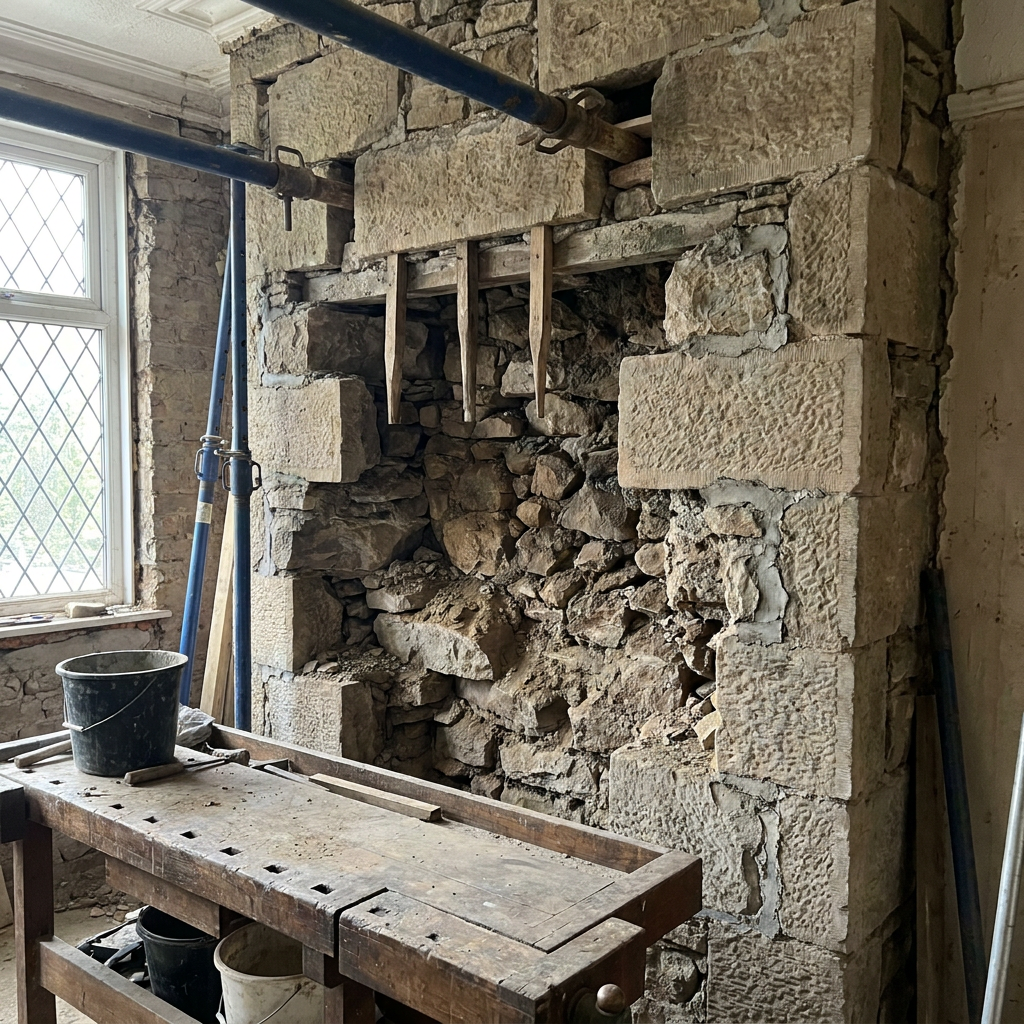
    Questions About Steel Beam Installation, Padstones, and Load Transfer

    I always tell homeowners to ask pointed questions before any builder touches a load-bearing wall. This checklist helps you spot cowboy practices early, focusing on propping, RSJ setup, padstones, and sign-off. Poor work here leads to point load failure, crushing, and settlement—disasters you don’t want.

    Engineered Questions to Spot Issues

    Ask these to ensure sound load transfer:

    • What temporary propping plan will you use during RSJ installation to support loads safely?
    • How will you ensure the beam aligns with the structural grid for even load distribution?
    • What specification of padstones will be used, such as C25/30 concrete or steel bearing plates, and how does it match the beam’s S275 or S355 steel properties?
    • What is the minimum bearing length required at each end of the beam, and how will you achieve it?
    • How will you position and level the RSJ to guarantee proper load transfer without misalignment?
    • Will the beam ends have adequate bearing area on the padstones to prevent point load crushing?
    • What connection details ensure secure RST joints without compromising load-carrying capacity?
    • How will you verify installation through structural calculations or sign-off from a qualified engineer?

    Insist on documentation for every answer. Review it yourself or with a pro to avoid cowboy shortcuts that cost dearly in repairs later.

    Questions About Fire Protection and Building Regulations Compliance

    Builders handle structural changes like removing load-bearing walls, so I ensure they address fire safety right from the start. Steel beams support these changes, yet they pose risks without proper protection against fire. I compel homeowners to verify builders comply with Approved Document B of the Building Regulations 2010. This document mandates fire-resistant treatments to keep the structure safe during a blaze. Cheap shortcuts here leave your home vulnerable to collapse and invite hefty fines from local authorities.

    Asking the right questions exposes unreliable practices before beams go up. I focus on methods like fire-rated plasterboard encasement or intumescent paint, as these provide lasting protection. Neglecting this invites enforcement notices that force costly fixes. Always insist on Building Control approval beforehand.

    Key Questions on Fire Protection

    I prepare a checklist to quiz your builder early. This spots cowboy tactics that skip safety for speed. Budget extra for materials like 12.5mm fire-rated plasterboard, plaster, and insulation—expect £150 to £300. Fees for Building Control run £200 to £400, varying by council and job size.

    Here are the engineering-led questions that demand clarity:

    • How will you fire-protect the steel beam, using approved methods like encasement with fire-rated plasterboard or intumescent paint?
    • What fire resistance period does Building Control require, such as 30 or 60 minutes, based on your home’s needs?
    • When will inspections happen, particularly before concealing the steelwork and at completion?
    • Will you deliver the Building Control Completion Certificate once the final check passes?

    Questions About Party Walls, Costs, and Project Timeline

    Party walls often create legal headaches if builders overlook them. I suggest asking up front to avoid costly surprises later. A cowboy builder might downplay this, leading to injunctions that halt your project and rack up fees from surveyors and courts.

    I recommend questioning if the wall qualifies as a Party Wall under the Party Wall etc. Act 1996. Push for details on whether they’ve served a Party Wall Notice to neighbors. Without it, you risk an Award failing, and work can stop cold. Surveyor fees run from £750 to £2,000 per neighbor, and both sides might need representation if talks break down.

    Engineering-Led Questions for Spotting Cowboy Practices

    I compiled this checklist of targeted questions to assess a builder’s engineering know-how before they start propping. These focus on propping, RSJ installation, padstones, and sign-off, helping you identify shortcuts that could compromise structural integrity or blow your budget.

    • How do you ensure safe propping during demolition, using items like Acrow Props or Strongboys? Insist on details about timber needles and checks for stability to prevent collapses.
    • What steps do you take for RSJ installation and securing padstones under the beam ends? Look for references to precise leveling and load distribution, avoiding weak spots that might shift over time.
    • Does your process include fire protection on the steelwork and full making-good of plasterwork after installation? Cowboys often skim on fire safety or finish quality, so probe for these essentials.
    • Who handles Building Control sign-off, and what timeline do you propose from engineering approval to completion? Gauge if they account for inspections and delays, pushing for a detailed schedule to catch unrealistic promises.

    Next, demand a full cost breakdown. Cowboys dodge this by quoting low and adding extras later. I push builders to itemize professional fees, labour, materials, and VAT, as UK costs always include 20% VAT.

    Labour typically costs £2,000 to £5,000 for a standard opening, fluctuating based on wall type, height, and access. Include waste removal at £250 to £450 for a 6-8 yard skip. Total project costs for removing a 3–4 metre load-bearing wall vary wildly with complexity, but expect variations in billable hours.

    Finally, quiz them on the overall timeline. From structural engineer appointment to sign-off, a realistic schedule ensures progress without unnecessary standoffs. I watch for vague answers here, as they signal inexperience or cutting corners.

    Sources:
    The Building Regulations 2010 (Approved Document A: Structure)
    The Building Regulations 2010 (Approved Document B: Fire Safety)
    The Party Wall etc. Act 1996
    Institution of Structural Engineers (IStructE) publications and guidance
    British Standards Institution (BSI) Eurocode suite (BS EN 1990 to BS EN 1999)

  • Retrospective RSJ Calculations And Regularisation: Fixing Past Structural Work

    Retrospective RSJ Calculations And Regularisation: Fixing Past Structural Work

    Unapproved structural alterations, such as RSJ installations and wall removals, frequently surface during property sales, often putting deals at risk and leading to costly setbacks. Retrospective structural assessments and Building Control regularisation offer essential pathways to bring these modifications into compliance with legal standards.

    Key Takeaways

    • Lender Rejection & Value Drop: Unauthorized structural alterations can lead to mortgage rejection and reduced property valuations.
    • Regularisation Process: Homeowners can apply for a Regularisation Certificate through their local Building Control by submitting drawings and proof of the work.
    • Retrospective RSJ Calculations: Structural engineers evaluate existing RSJ work for compliance with building standards and load-bearing criteria.
    • Costly Consequences: Rectifying unapproved modifications retrospectively can be expensive, often surpassing the cost of upfront approval.
    • Early Intervention is Key: Engaging an engineer before listing a property helps resolve issues early, preserving value and preventing delays.

    Having worked on numerous property sales, I’ve seen how structural issues often emerge during surveys or legal reviews. Understanding how and when to carry out a retrospective structural assessment can dramatically reduce stress, delays, and unexpected costs.

    Understanding Structural Alterations Without Approval

    Many homeowners unknowingly make structural changes without securing necessary approvals. Examples include:

    • Removing load-bearing walls
    • RSJ (steel beam) installations
    • Extensions and loft conversions
    • Modifications to staircases

    Failure to engage professionals or understand regulations may result in non-compliance. Solicitors routinely uncover such issues during due diligence, impacting sales.

    The Impact on Property Sales

    Unapproved structural work often leads to:

    • Mortgage rejection: Lenders consider unauthorised structural changes a risk, frequently resulting in application denial.
    • Lower offers or sales collapse: Missing approvals may prompt buyers to walk away or renegotiate lower prices.
    • Sales delays: Transparency requirements mean buyers must be informed of structural issues, potentially losing interest.

    Time constraints during transactions can amplify stress and financial strain, especially in property chains.

    What is a Retrospective Structural Assessment?

    This type of assessment determines the safety and compliance of previously completed structural changes. Conducted by chartered structural engineers, the process includes:

    1. Site surveys
    2. Structural calculations and material analysis
    3. Review of load paths, foundation support, and connection strength

    The final report includes evidence-based documentation and calculations used to support Building Control applications.

    Building Control Regularisation Explained

    Building Control regularisation is a formal process to legalise unauthorised but completed works. Steps include:

    1. Submit an application with detailed structural drawings, calculations, and proof of the completed work
    2. Pay applicable fees (typically £400 to £800 depending on the council)
    3. Undergo site inspections and potentially perform remedial work

    Approval results in a Regularisation Certificate—an essential document for property transactions and mortgage lenders.

    The Retrospective RSJ Calculation Process

    RSJ calculations involve evaluating key elements of installation, including:

    • Beam size and material: Confirming the steel grade and actual dimensions used
    • Load calculations: Accounting for both dead and live loads acting on the beam
    • Connection details: Ensuring safe load transfer at beam ends
    • Deflection checks: Limiting structural flex to acceptable British Standard levels

    Engineers may request testing if detailed material data is unavailable, especially in older constructions.

    Common Issues Found During Assessments

    • Undersized beams: One of the most frequent issues that compromises structural safety
    • Inadequate support: Poor bearing or weak walls supporting beams can lead to collapse
    • Improper joints and connections: Temporary-fit connections not replaced with designed solutions
    • Foundation overload: Structural changes changing the original load path may exceed foundation limits

    Each of these issues not only poses safety risks but also complicates real estate transactions and increases regularisation costs.

    Working with Building Control

    Engaging with Building Control early in the regularisation process is critical for smoother outcomes. It’s beneficial to:

    • Consult local authorities: Gain clarity on submission requirements and expectations
    • Use complete documentation: Ensure applications include detailed reports and drawings to reduce delays
    • Maintain communication: Foster open dialogue to quickly clarify or address concerns

    Engineers familiar with your local Building Control’s processes can greatly improve your chances of speedy approval.

    Cost Considerations

    Expect the following typical costs:

    • Structural assessments: £500 to £2,000 depending on the number of elements and complexity
    • Regularisation fees: £400 to £800, depending on local authority policies
    • Remedial work: May add significantly to total cost if major non-compliance is found

    Planning and budgeting early for these expenses can significantly reduce financial strain. Urgent assessments can carry a premium, especially during pending transactions.

    Prevention and Planning

    The best method to avoid regularisation complications is proper foresight and compliance:

    • Obtain proper approvals: Seek Building Control input before initiating structural work
    • Use qualified professionals: Structural engineers and registered contractors ensure work is legal and sound
    • Keep records: Store certificates, calculations, and drawings safely for future reference
    • Schedule maintenance: Annual inspections can reveal signs of unapproved or failing structural elements

    These preventative steps can add long-term value to your property and simplify future transactions.

    When to Seek Professional Help

    Here are situations where expert intervention is essential:

    • Upon discovering unapproved work: Seek assessment early to avoid time-sensitive complications
    • During property marketing: Engage an engineer proactively to resolve issues before listing the property
    • For legal guidance: Complex cases may require solicitors with experience in construction law
    • For navigating regulations: Consult Building Control early for free initial guidance on your property’s compliance status

    My consistent experience shows that earlier engagement with professionals leads to smoother, faster, and less expensive outcomes for property owners.

    For further guidance on Building Control regularisation, you can refer to the UK Government Building Regulations Approval page.

    Why Your House Sale Might Collapse Without a Retrospective Structural Assessment

    Property sales often hinge on uncovering hidden issues with past home improvements. Lenders and buyers scrutinize unapproved structural changes like wall removals or RSJ installations. Demand for a Regularisation Certificate arises quickly in these cases. Fail to provide it, and your sale could derail completely.

    Mortgage lenders reject applications without proof that structural alterations comply with regulations. Conveyancing solicitors flag deficiencies during searches. Potential buyers walk away if concerns linger about safety or legality. These factors trigger property value drops ranging from 10 to 20 percent.

    Retrospective RSJ calculations address this by evaluating installed steel beams—often Universal Beams or Columns—added without design or approval. Chartered Structural Engineers perform these assessments. They check load-bearing capacity, material suitability, and integration with existing structures. Fresh calculations reveal whether beams meet standards from installation time.

    You might think old work is acceptable, but lenders disagree. Retrospective assessments prove compliance retroactively. This saves sales by satisfying demands before contracts exchange.

    Steps to Secure Regularisation Through Building Control

    Apply to your local authority’s Building Control for a certificate. This process, called Regularisation, confirms unauthorised work aligns with Building Regulations effective when done. Base it on Section 36 of the Building Act 1984 for legal standing.

    I recommend gathering evidence first:

    • Collect photos, receipts, and builder notes
    • Hire an engineer to produce calculations and drawings
    • Submit as a formal application to Building Control

    Fees apply, varying by council, but costs stay manageable at under £500. Approval timelines extend 2 to 8 weeks. Once granted, the certificate clears your property for sale.

    For novices, start simple. Consult a local engineer specializing in retrospectives. Experts align calculations with current Eurocodes if needed for currency. This approach legalizes historic changes, turning potential obstacles into sale enablers. Fresh assessments prevent lender rejections and preserve value.

    The Hidden Dangers Lurking in Your Walls: When Unapproved Steelwork Becomes a Safety Hazard

    Many homeowners overlook the risks of unapproved structural changes such as wall removals or RSJ (Rolled Steel Joist) installations. These alterations often proceed without proper permits or inspections, potentially compromising the safety of your property. Understanding these hazards can help you recognize when it’s time to seek professional advice to pursue legalization.

    Unapproved beams that rest on masonry surfaces without adequate bearings or padstones can create dangerous point loads. This overly concentrated weight may crush the underlying stonework, leading to visible cracking and even structural movement. Left unaddressed, these issues could result in partial or full wall collapses. Similarly, undersized beams may sag or deflect excessively, exceeding acceptable deflection limits such as L/360 for floors or L/200 for roofs and walls. These structural inconsistencies cause cracks in finishes and can damage windows, partitions, or even upper floors.

    Just one weak link in the structural framework can initiate cascading failures, a process known as progressive collapse. This is particularly common when load-bearing walls are removed without approval, compromising the stability of the entire building. This is especially common in older homes where previous owners made renovations without recognizing the long-term consequences.

    Insurance providers require strict adherence to Building Regulations for any structural modifications. Unapproved work not only voids insurance coverage but also leaves homeowners financially exposed if they file a claim. Local authorities enforce compliance by issuing Enforcement Notices, obligating owners to either legalize or reverse the changes at their own expense. Failing to do so could result in legal action and additional costs, making early intervention critical.

    Risks of Unapproved Structural Changes

    Before initiating the regularization process, it’s vital to understand these common risks:

    • Improper beam support leads to localized crushing and point load failure within walls.
    • Excessive deflection results in sagging floors, cracks in ceilings, and damage to structural and non-structural elements.
    • Structural failures pose the threat of progressive collapse, risking the integrity of the entire building.
    • Insurance invalidation becomes a concern without Building Control approval for modifications.
    • Enforcement Notices can mandate costly corrections or deconstruction, potentially escalating to legal complications.

    To legalize historic wall removals or RSJ installations, it’s essential to contact your local Building Control department. Submit detailed structural drawings and documentation of the existing work to initiate the regularization process. This step allows you to confirm structural integrity without resorting to complete demolition, saving both time and resources.

    If you’re preparing to sell your home, having up-to-date structural calculations is invaluable. These documents provide buyers and surveyors with evidence that the modifications meet safety and regulatory standards. They often make the difference between a smooth transaction and a deal falling through. It’s highly recommended to work with qualified structural engineers to produce accurate reports that align with current Building Regulations, providing peace of mind for all parties involved.

    To learn more about the symptoms of structural failure and beam deflection, you may find the following video helpful:

    https://www.youtube.com/watch?v=ExampleVideoID

    What Cowboy Builders Don’t Tell You: The Most Common Shortcuts That Put Your Home at Risk

    I often see homeowners blindsided by the dangers of cowboy builder shortcuts, especially when they skip proper planning for structural changes like removing walls or installing RSJs. These builders rely on guesswork for beam installations instead of precise engineering calculations, leading to weak supports that fail under load. Undersized steelwork compounds the issue, creating collapse risks that emerge too late.

    Risks from Common Oversights

    I’ve identified key problems that compromise safety and legality:

    • Neglecting adequate temporary propping during construction, leaving structures vulnerable mid-work.
    • Using undersized padstones or providing short bearing lengths, which concentrate loads and lead to point failures.
    • Skipping Building Control notifications, which turns modifications into illegal hazards.
    • Ignoring the Party Wall Act 1996, which invites neighbor disputes that demand expensive fixes.

    To avoid these pitfalls:

    1. Insist on fresh structural calculations before any home sale—this proves compliance without starting over.
    2. Contact local Building Control for regularisation of past RSJ work, submitting accurate drawings and specifications for approval.
    3. Always verify builder credentials to protect your property’s integrity.

    By staying informed and proactive, you can walk away from risky shortcuts and safeguard both your investment and your family’s safety.

    How Engineers Assess Your Existing Steel Beam and What They’re Actually Looking For

    When you hire a Chartered Structural Engineer to inspect your historic RSJ (Rolled Steel Joist) installation, the process typically starts site by site. The engineer carefully measures the steel beam’s dimensions, span, and how it connects to the surrounding walls or columns. These key details determine whether the beam—often a Universal Beam (UB) or supported by a Universal Column (UC)—is appropriately sized and properly integrated into the structure.

    In addition to the steel itself, engineers also examine the condition of the masonry or other materials beneath the beam. Signs of damage, such as masonry crushing, may indicate insufficient bearing capacity, suggesting that the installation could be unsafe.

    Load Path Analysis

    Next, engineers perform a load path analysis. This process traces how various forces travel through the structure. For example, if you’ve removed an internal wall and added an RSJ to carry the overhead load, the engineer will calculate point loads from beams, joists, or wall segments. These loads include both:

    • Dead loads: The weight of the building materials and the RSJ itself
    • Live loads: Additional weight from occupants, furniture, or snow

    The calculations must align with Approved Document A (Structure), which outlines regulations for safe structural design. Adhering to these standards ensures that your RSJ can legally support your home’s structure, particularly during a Building Control regularisation process.

    Structural Performance Checks

    Engineers also assess how well the beam performs under stress. This involves testing several key components:

    1. Bending capacity – Can the RSJ withstand downward forces without excessive sagging?
    2. Shear resistance – Will the beam’s connections prevent it from sliding or shifting under pressure?
    3. Deflection – How much does the beam bend under load, and does this create risks such as ceiling cracks?

    To guide these evaluations, professionals refer to standards such as:

    • BS EN 1990 – Basis of structural design
    • BS EN 1991 – Load actions on buildings
    • BS EN 1993 – Design of steel structures

    If your existing beam passes the assessment, the engineer generates a technical report suitable for Building Control. If not, they’ll suggest reinforcements such as additional steel plates or even a full redesign of the support system.

    To avoid delays in a property transaction, it’s advisable to have a full audit performed well in advance. Buyers increasingly request up-to-date calculations for previously unapproved modifications. A proper inspection turns a potential legal issue into a smooth regularisation. Engineers also inspect padstones beneath the beam for proper sizing and load distribution—overlooked faults here can result in structural failure, which property surveys may miss.

    Common Issues During Assessments

    During inspections, engineers frequently encounter recurring problems due to non-professional installations. Common issues include:

    • Improper span lengths that overstress the RSJ
    • Loosely bolted connections, risking collapse even under moderate loads
    • Obstructed access caused by clutter, making it hard to spot rust or alignment problems

    These missteps can halt or delay a regularisation process. To avoid surprises, ensure clear access to all structural components before your engineering assessment.

    If you’re planning to sell, hire an engineer early on. They can identify and correct deficiencies before viewings start. A certified technical report reassures buyers and reduces the chance of offers falling through. The bottom line: get your beam assessed now to avoid expensive complications later.

    https://www.youtube.com/watch?v=samplevideoURL

    The True Cost of Fixing Structural Work You Should Have Done Right the First Time

    Retrospective structural work is often far more expensive and risky than getting it done correctly from the beginning. Many homeowners face unexpected costs when legalising unauthorised historic wall removals or RSJ (Rolled Steel Joist) installations through Building Control regularisation. Skipping accurate structural calculations at the outset can lead to complications that not only inflate expenses but also delay house sales.

    Common Costs for Retrospective Structural Work

    The financial burden of retrospective approval and repairs can be significant. Below is a breakdown of common expenditures homeowners may incur:

    • Chartered Structural Engineer Assessment: £800 to £2,500 plus VAT; complex jobs can rise to £3,500 plus VAT.
    • Architect or Surveyor Fees (for missing plans or permissions): £500 to £1,500 plus VAT.
    • Local Authority Building Control Charges (for regularisation): £250 to £500 per alteration.
    • Steelwork Replacement or Strengthening (fabrication & supply): £600 to £2,500 plus VAT; custom components: £500 to £1,500 plus VAT.

    Labour and Finishing Costs

    Labour costs for making the structure safe post-facto can also be steep:

    • Remedial Labour (e.g., temporary propping and reinstatement): £1,500 to £6,000 plus VAT per beam opening.
    • Padstone Updates: Material costs range £50 to £150 plus VAT each; labour: £400 to £1,200 plus VAT.
    • Plastering & Decorating: £1,500 plus VAT.
    • Scaffolding: £2,000 plus VAT.

    These additional layers of remedial work often add an extra £1,000 to £3,000 beyond what a well-planned structural job would have originally cost. And that doesn’t account for the stress and delays involved.

    The Upfront Alternative: A Budget-Friendly Choice

    Compared to retroactive fixes, proper upfront planning—complete with approved calculations and permissions—can be surprisingly affordable. Typical costs include:

    • Initial structural design and permissions: £800 to £1,500 plus VAT (exclusive of build costs).

    By investing early in correct documentation and planning, homeowners avoid overloading bills, minimise legal trouble, and safeguard property value.

    Advice for Sellers

    If you’re planning to sell, it’s wise to obtain fresh structural calculations right away. These:

    1. Validate existing work.
    2. Help clear Building Control queries.
    3. Prevent delays during transactions.

    Prompt action not only ensures compliance but also gives peace of mind and aids a smoother property sale process. Don’t wait until a solicitor raises red flags—act early and save yourself time, money, and stress.

    For those unfamiliar with RSJ installations, this video tutorial offers helpful insights:

    https://www.youtube.com/watch?v=_sampleURL123

    Why You Should Never Touch a Load-Bearing Wall Without a Chartered Structural Engineer

    I always advise homeowners to consult a Chartered Structural Engineer before making any changes to load-bearing walls, as these elements support your entire property. Structural failure from unsupported alterations can lead to collapsed ceilings or floors, posing serious risks to life safety and property value. Legal issues arise too, since alterations done without proper approval violate Building Regulations outlined in Approved Document A.

    A Chartered Structural Engineer, registered with the Institution of Structural Engineers (IStructE), brings deep expertise in British Standards and Eurocodes (BS EN 1990–1999). They hold professional indemnity insurance, so I recommend choosing one marked with the designation MIStructE for qualified assurance.

    Benefits of Professional Involvement

    These experts conduct thorough assessments to specify correct beam types, sizes, and materials for RSJ installations. They ensure full compliance with regulations, preventing the need for costly regularisation later. Engaging them upfront costs far less than fixing unsafe work, which often requires fresh structural calculations to save a house sale. They notify Building Control early, allowing inspections and avoiding illegal builds.

    Technical Expertise and Tools

    Structural Engineers use advanced software like:

    • Tekla Tedds
    • SCIA Engineer
    • CSC Orion

    to analyze loads accurately. This saves homeowners from cowboy builders who lack such tools and produce substandard designs. I emphasize their role in due diligence to maintain structural integrity, avoiding the disruptions of a botched job that fails during a test or even worse, inspection.

    Skipping this step turns prevention into cure, where unregulated changes might block sales or require demolition and rebuild. Prioritize Building Control approval for peace of mind and long-term value.

    https://www.youtube.com/watch?v=yeYPsGQCWhc

    Sources:
    The Institution of Structural Engineers (IStructE)
    Approved Document A – Structure (HM Government)
    The Building Act 1984 (HM Government)
    The Party Wall etc. Act 1996 (HM Government)
    British Standards Institution (BSI) – particularly BS EN 1990, BS EN 1991, BS EN 1993 (Eurocodes)

  • Open-plan Living Without The Drama: Structurally Safe Kitchen-diner Knock-throughs

    Open-plan Living Without The Drama: Structurally Safe Kitchen-diner Knock-throughs

    Creating open-plan living spaces by removing load-bearing walls offers expansive design possibilities, but requires careful structural planning and adherence to regulations to ensure safety and stability. Achieving a seamless kitchen-diner knock-through safely depends on understanding structural engineering principles and meeting the requirements of Building Control, neighbors, and insurance providers.

    Key Takeaways

    • Professional Engineering is Essential: I always engage a Chartered Structural Engineer (MIStructE) to assess loads and design appropriate structural supports like RSJs, posts, and nibs before any wall removal.
    • Secure Building Control Approval: I obtain formal approval from Local Authority Building Control before starting work, addressing regulations and the Party Wall Act to protect neighbors.
    • Party Wall Agreements are Crucial: I proactively engage a Party Wall Surveyor and generate a Party Wall Award to avoid disputes and ensure legal compliance when working near shared walls.
    • Fire Safety is Paramount: I properly compartment my property by sealing openings with fire-rated materials, adhering to Approved Document B guidelines, to prevent fire spread.
    • Employ Qualified Professionals: I hire experienced and certified builders who understand Building Regulations and can deliver compliant structural work, safeguarding long-term property value and insurer approval.

    Never Remove a Load-Bearing Wall Without a Chartered Structural Engineer and Building Control Approval

    I always stress this point because removing a load-bearing wall without expert guidance invites disaster. You might dream of a seamless kitchen-diner flowing into an open space, but structural integrity hinges on precise calculations from a Chartered Structural Engineer with MIStructE qualifications. They assess loads from floors above, roofs, and adjoining structures to ensure stability. Skipping this step risks collapse, endangering lives and properties.

    Always secure official consent from your Local Authority Building Control before starting. They enforce regulations, including the Party Wall Act, which protects neighbors from potential damage. Informal chats with builders or online forums won’t cut it—demand formal approvals based on engineered designs. This path keeps you compliant and shields against legal troubles down the line.

    Costs for professional advice seem steep at first, but they pale beside the hefty bills from unauthorised alterations. A botched job could void your home insurance, leaving you footing massive repair bills if issues arise. I’ve seen owners face personal liability for neighbor disputes or property failures, proving that shortcuts lead to financial nightmares.

    For those reshaping spaces safely, I guide them through engineered supports like RSJs, posts, and nibs. These solutions bridge wide openings, blending your design vision with solid structural reality. You achieve that expansive kitchen-diner connection without compromising safety, all while satisfying Building Control, party wall neighbors, and insurers.

    Professional drawings detail every beam and joist, ensuring Party Wall notices notify impacted parties early. This transparency builds trust and avoids costly delays. You end up with a transformation that feels right, backed by expert endorsement.

    Key Risks of Shortcutting on a Load-Bearing Wall Removal

    Unauthorised removals amplify everyday dangers into serious threats. For instance, improper support might shift loads unevenly, cracking walls or ceilings in your home or your neighbor’s. Insurance providers often drop coverage after discovering unlicensed changes, exposing you to claims for damages. Legal ramifications include:

    • Fines from Building Control for non-compliance
    • Lawsuits under the Party Wall Act for ignoring neighbor agreements
    • Voided property insurance leading to personal financial liability

    This isn’t about stifling creativity—it’s about executing it soundly. I advocate for verified steps to create inviting, open-plan areas that last. Partners with me use RSJs to open up flow between kitchen and diner areas, reinforced with nibs for stability. We design these details to align with local bylaws, securing approvals that reassure insurers and avoid disputes. Those results speak volumes, turning potential DIY disasters into successful renovations.

    Understanding What You’re Actually Removing and What Must Replace It

    You’re likely eyeing an open-plan kitchen-diner for that airy vibe, but dismantling a load-bearing wall demands precise replacements to maintain safety. I focus on replacing vertical loads from above floors with engineered beams that keep everything stable.

    Identifying the Load-Bearing Wall

    These walls support weight from upstairs floors or roofs, transferring substantial point loads down to foundations. Removing one without a plan risks structural collapse, so always consult a structural engineer early. They assess the wall’s exact role in your building’s superstructure.

    I start by recommending surveys that map out loads, ensuring Building Control approves your scheme. This avoids disputes with insurers or party wall neighbours. For instance, Acrow props and strongboys provide temporary support during demolition, holding up overhead structures while you install the new beam.

    Installing Reliable Replacements

    Engineered RSJs or steel beams often serve as replacements, designed to bridge wide openings safely. Place them on robust padstones—dense concrete slabs that spread loads evenly into masonry walls below. This setup distributes stress without cracking foundations.

    Concrete lintels or timber flitch beams work for narrower spans, but I opt for RSJs in larger homes to blend design ambitions with reality. Final encasing uses fire-rated plasterboard to meet regulations and tuck beams neatly into ceilings.

    Secure all elements firmly, as Building Control demands verifiable calculations. I ensure party wall agreements and insurer checks happen upfront, preventing costly delays. This approach lets you create inviting open spaces without compromising safety.

    The Real Cost of Doing It Properly in 2025

    I tackle structural challenges in kitchen-diner knock-throughs by focusing on safe, wide openings that preserve stability. Expect costs to rise as building standards evolve, but planning ahead keeps regulatory bodies satisfied without hikes.

    Breaking down the expenses shows layered costs beyond basic demolition. I recommend getting quotes early and factoring in VAT to avoid surprises.

    Professional Services

    I always advise consulting a Chartered Structural Engineer first. Their fees cover a site inspection, Eurocode-compliant calculations per BS EN 1990–1997, and design drawings. You pay £600–£1,500 plus VAT for these essentials. Next, submit a Building Control Application to your local authority, costing £300–£500 depending on project size. Ignore this step and risk failing inspections.

    If you share a party wall with neighbors, hire a Party Wall Surveyor. Their work, including generating a Party Wall Award, runs £900–£2,000+ per adjacent property. This ensures you satisfy legal requirements and avoid disputes.

    Materials and Labour

    For the steel elements, an RSJ—your primary load-bearing option—costs £250–£900, including delivery and primer. Pair it with padstones at £40–£120 per pair to distribute weight correctly.

    Rent temporary propping equipment like Acrow props or strongboys for £75–£200. These keep structures secure during work.

    You’ll need sundries such as cement, insulation, and fire-rated plasterboard for £150–£400. These finish the job to meet fire safety codes.

    Labour from a skilled builder totals £1,800–£4,500 for a 3–5 day stint covering demolition, installation, waste removal, and finishing touches. Choose experienced teams to handle RSJ placement and ensure insurer-approved results.

    Overall, plan for total costs of £3,100–£9,600+, with average projects hitting £4,500–£7,000. I stress that these figures exclude kitchen fittings or full redecoration. Adjust for your home’s specifics to balance savings with safety. This approach supports design goals while aligning with insurers and neighbors.

    The Life-Threatening and Financial Risks of Getting It Wrong

    Ignoring Building Regulations and professional input when knocking through a wall turns a renovation into a serious hazard. I often encounter clients who underestimate these dangers, leading to unauthorised works that breach The Building Regulations 2010 and Approved Document A. This exposes you to enforcement notices, hefty fines, and in worst cases, demolition orders. Without a Building Control Completion Certificate, selling your property becomes impossible and legal compliance falls apart.

    Structural Failures That Doom Your Home

    Misidentify a load-bearing wall, skip temporary support, or choose the wrong beam specifications, and a structural collapse looms. Immediate risks include:

    • Sagging floors
    • Masonry cracking
    • Bowed walls
    • Roof or foundation failure

    These are scenarios that spell disaster and potential fatalities. In the long term, point load failure accelerates degradation, often voiding insurance claims for unapproved work. An unqualified builder makes matters worse, turning a dream extension into a nightmare.

    The Party Wall etc. Act 1996 demands proper notice for shared wall work, yet non-compliance triggers:

    1. Legal injunctions
    2. Costly disputes
    3. Project delays
    4. Forced surveyor hires

    Fire safety under Approved Document B erodes without proper fire compartmentation, increasing dangers like fire spread. At the same time, thermal bridging worsens energy loss, compromising energy efficiency. Unqualified builders further inflate renovation costs with cowboy tactics.

    I strongly emphasize that insurers reject claims on faulty renovations, leaving property owners financially exposed. Experts advise consulting structural engineers early to avoid these traps, ensuring RSJs and posts support wide openings without compromising stability. I also recommend seeking Building Control sign-off upfront to ensure peace of mind.

    Fire Safety and Compartmentation Requirements You Cannot Ignore

    I blend design dreams of wide, inviting openings with the hard facts of structural safety, ensuring you create those open-plan kitchens and diners using RSJs, posts, and nibs. Yet, I always remember that Building Control, party wall neighbors, and insurers demand strict compliance to avoid disputes or claims. Fire safety sits at the core of this, where compartmentation prevents blazes from spreading unchecked through your home.

    Fire can race through unsealed gaps around beams, posing grave risks in flats or shared buildings. I advise sealing all new structural elements with fire-rated materials to maintain compartmentation, as this keeps flames contained and buys time for escape.

    Under The Building Regulations 2010, Approved Document B: Fire Safety sets the rules. I interpret these to mean every opening must uphold fire resistance, especially in multi-occupancy settings. For instance, use fire mastic to seal joints and fix fire-rated plasterboard to coverings around RSJs.

    Essential Practices for Compliance

    To keep everyone safe without sacrificing your vision of expansive spaces, I follow these steps:

    • Inspect existing walls for breaks; repoint and seal them with fire mastic before knocking through.
    • Encase any exposed steel beams in fire-rated plasterboard, ensuring at least 30 minutes of resistance per guidelines.
    • Consult a structural engineer early to place posts and nibs correctly, avoiding weak points that could breach compartments.

    I incorporate these measures during installation, testing seals to verify no pathways for smoke or flames. This approach satisfies inspectors and protects lives, letting you enjoy a structurally sound, fire-safe open layout. Always document your methods for insurers, showing how design and safety unite seamlessly.

    Why Professional Builders Matter and Cowboy Builders Will Cost You Everything

    I blend design aspirations with structural reality, showing how to achieve wide openings safely using RSJs, posts and nibs while keeping Building Control, party wall neighbours and insurers on-side. You hire an unqualified builder or cowboy because they seem cheaper at first, but that mistake ramps up risks of non-compliance with structural designs and British Standards. They cut corners that compromise safety in open-plan kitchen-diner knock-throughs, exposing you to issues that erode your home’s integrity over time.

    Risks of Hiring Cowboy Builders

    An unqualified builder often overlooks key details in structural work, leading to problems like deflection where load-bearing elements shift under weight. This creates cosmetic damage, such as plaster cracking in your new kitchen-diner layout, disrupting the smooth, open space you envision.

    Thermal bridging occurs when insulation gaps form, drawing in moisture that causes water damage and mold growth. These faults tend to hide at first, surfacing as costly repairs that challenge your property’s value.

    Without proper certification, these cowboys fail to secure a Building Control Completion Certificate, leaving you non-compliant and liable for legal headaches. The resulting chaos alienates insurers, who deny claims due to improper installations, and strains relations with party wall neighbours over shared faults.

    Advantages of Certified Tradespeople

    I recommend choosing experienced and certified tradespeople who deliver compliance every time. These professionals use RSJs, posts, and nibs to create safe, wide openings that meet standards while honoring your design dreams.

    They:

    • Inform Building Control early
    • Maintain clear communications with neighbours
    • Align with insurer guidelines for smooth approvals

    This approach protects occupant safety by preventing collapses or unforeseen issues, and it sustains your property’s long-term value. By avoiding shortcuts, certified builders safeguard against hidden defects, giving you peace of mind in your renovated space.

    Their expertise turns potential dramas into seamless transformations that stand the test of time.

    https://www.youtube.com/watch?v=HOomP5c63k0

    Sources:
    The Building Regulations 2010 (as amended) – Approved Document A: Structure
    The Building Regulations 2010 (as amended) – Approved Document B: Fire Safety
    The Party Wall etc. Act 1996
    Institution of Structural Engineers (IStructE) publications and guidance (e.g., “Manual for the Structural Design of Low-Rise Buildings in Accordance with Eurocodes and UK National Annexes”)

  • Retrofit Boom 2025: How Open-plan Living And Green Upgrades Are Quietly Rewriting UK Structural Rules

    Retrofit Boom 2025: How Open-plan Living And Green Upgrades Are Quietly Rewriting UK Structural Rules

    Across the UK, homeowners are embracing net-zero retrofits and open-plan layouts to create more sustainable and spacious living environments. However, these popular trends introduce significant structural risks such as overloaded beams, improperly executed knock-throughs, and weakened Victorian masonry, which are often overlooked during renovation planning.

    Key Takeaways

    • Structural Assessments are Crucial: Before undertaking any significant alterations like open-plan conversions or structural changes for energy efficiency upgrades, a detailed assessment by a Chartered Structural Engineer is essential to identify and reduce potential risks.
    • Consider Victorian-Era Peculiarities: Older Victorian homes pose unique challenges because their thick internal walls historically provided lateral stability. This stability disappears when walls are removed without proper reinforcement.
    • Green Upgrades Add Load: Eco-friendly improvements like solar panels, air source heat pumps, and triple glazing significantly increase a building’s weight, often requiring beam and foundation reinforcements.
    • Professional Oversight is Mandatory: Qualified and insured professionals, including Building Control and structural engineers, must be involved to ensure safety, regulatory compliance, and avoid costly rework or legal issues.
    • Prioritize Quality Materials and Craftsmanship: Selecting corrosion-resistant, waterproof materials and ensuring skillful installation is vital for long-term structural endurance, especially in damp environments common in older properties.

    The Hidden Structural Challenge of Modern Retrofits

    Open-plan living is transforming traditional British homes into more contemporary spaces. Homeowners often knock down walls between kitchens and dining rooms to create seamless, flowing layouts. At the same time, green upgrades such as external wall insulation and roof-mounted solar arrays promise energy savings. However, these enhancements also introduce structural complications that are frequently underestimated.

    In many projects, the enthusiasm for modernisation often overshadows key structural considerations. Victorian terraces lose critical load-bearing walls without adequate steel reinforcements. Edwardian semis struggle under the additional weight of heat pumps and insulation. Modern extensions are frequently attached to period properties without proper structural calculations.

    Each change impacts the home’s existing support systems. Removing walls that have upheld a property for over a century compromises its integrity. Added structural loads from technologies like solar panels often exceed original design limits. Poorly executed modifications only amplify the risks, leading to expensive remedial work later.

    Victorian Properties: Special Structural Considerations

    Victorian homes carry distinct challenges when undergoing retrofit projects. Originally constructed with thick internal and party walls, these elements served both as room dividers and as vital structural supports.

    Mass masonry defines the makeup of these homes, with solid brick walls two or more bricks thick. Removing internal walls in such structures eliminates significant support, demanding careful compensatory measures like steel beams or portal frames.

    Victorian lime mortar, which offers some flexibility, becomes brittle over time, making it sensitive to renovation impacts. Modern changes can disrupt the balance between structural elements, especially when new loads are introduced without reinforcing the weakened joints appropriately.

    Additionally, shallow stone or brick footings are common in these homes and were never designed with today’s additions—like heat pumps, solar panels or external insulation—in mind. Thus, structural calculations are vital to ensure the building can accommodate any new weight burden.

    Green Technology’s Structural Impact

    Adding green technology can profoundly affect a building’s structural system:

    • Solar Panels: These add 10–20 kg per square metre to roofs. Wind uplift increases as well, requiring additional roof bracing and timber reinforcement.
    • Air Source Heat Pumps: Typically weighing 50–100 kg, these systems also cause vibration and require solid mounting and proper integration into building structures.
    • External Wall Insulation: While improving thermal performance, it significantly increases wall loads through layers of thick boards, renders, and fixings.
    • Triple Glazing: These heavier windows demand reinforced lintels, upgraded window frames, and, occasionally, new supports for larger openings.

    Common Structural Failures in Retrofit Projects

    Several structural concerns frequently arise in retrofit projects:

    1. Improper Wall Removal: Removing load-bearing walls without installing appropriate support often leads to sagging, cracking, and even collapse.
    2. Undersized Steel Beams: Beams must be calculated for load, span, and deflection; otherwise, excessive movement can damage surrounding elements.
    3. Poor Bearing Length: Inadequate support under beams concentrates stress and displaces loads, leading to structural instability.
    4. Weak Connection Details: Beams must form continuous structural paths. Poor connections reduce performance and increase failure risks.
    5. Foundation Overload: New loads may exceed original limits, causing cracking or settlement. Reinforcement, underpinning, or extensions are often required.

    Professional Assessment Requirements

    A Chartered Structural Engineer brings essential expertise to identify and mitigate risks. Their calculations and advice are also a requirement for many modifications under UK Building Regulations.

    Building Control approval from the local authority ensures that design and execution comply with safety and energy efficiency standards. Early engagement helps avoid setbacks during construction.

    Party Wall Agreements form important legal protections for neighbouring properties. Any alterations near shared walls in terraced or semi-detached homes typically require this documentation.

    Special consideration is necessary when dealing with properties in Conservation Areas or those that are Listed Buildings. Structural changes must align with heritage constraints and often require bespoke solutions.

    Material Selection for Structural Retrofits

    Choosing high-performance materials improves durability and resilience:

    • Stainless Steel Fixings: Corrosion-resistant even in damp conditions, these last far longer than traditional steel.
    • Fire and Corrosion-Protected Steel: Intumescent paints and galvanised coatings extend steel lifespan.
    • Engineered Timber: Products like Glulam beams offer eco-friendly strength with visual appeal for heritage properties.
    • Advanced Concrete Mixes: Reinforced, waterproof concrete ensures durability in wet or aggressive environments.

    Installation Best Practices

    Proper execution ensures that designs perform as intended:

    • Temporary Support: Acrow props and needling systems provide support during wall removals and alterations. Poor temporary support causes irreversible damage.
    • Accurate Positioning: Beams and supports must align perfectly. Misalignment reduces load-spread efficiency and increases stress points.
    • Quality Assurance: Onsite inspections confirm compliance with structural drawings. Mistakes caught early prevent costly repairs.
    • Multitrade Coordination: Electrical, plumbing, and HVAC tasks must work seamlessly with structural elements to avoid conflicts or errors.

    Cost Implications of Structural Compliance

    Investing in proper structural evaluation and execution pays off in the long run:

    • Engineering Fees: Typically 1–3% of project costs, these provide risk assurance and ensure robust construction.
    • Building Control: Compliance fees vary with project complexity but protect future resale and safety.
    • High-Quality Materials: Corrosion-resistant fixings and treated steel may cost more but prevent future replacements.
    • Skilled Labour: Qualified contractors assure proper installations that align with engineering design, avoiding rework.

    Future-Proofing Structural Retrofits

    Today’s decisions impact tomorrow’s performance. Consider the following:

    • Climate Resilience: Increased wind and rainfall demand stronger roof anchors and improved drainage systems.
    • Technology Flexibility: Structural systems should accommodate electric vehicle chargers, solar batteries, and automation devices.
    • Monitoring and Maintenance: Inspections and sensors can detect potential movement or degradation early on.
    • Documentation: Preserving structural drawings and certifications supports future renovation efforts and protects property value.

    Regulatory Landscape Changes

    Stay informed about evolving requirements:

    • Updated Building Regulations: Revisions focus on climate resilience and overall robustness. Regularly check for new standards.
    • British Standards: These technical documents guide material use and calculation methods. Engineers follow updates to ensure compliance.
    • Fire Safety Requirements: Structural upgrades must consider fire compartmentation and safe escape routes, especially in multi-storey buildings.
    • Energy Efficiency Mandates: Regulatory targets for insulation and performance increase loads, influencing structural design decisions.

    Conclusion: Balancing Ambition with Structural Reality

    Modern retrofit ambitions offer exciting possibilities—but only if aligned with structural realities. Open-plan living and green technologies can significantly enhance comfort, energy efficiency, and value—when guided by proper structural oversight.

    Professional assessments, quality materials, and expert installation are not optional but essential. Cutting corners may lead to failures that are dangerous and costly.

    The UK’s retrofit revolution presents an opportunity to elevate the housing stock. With a focus on safety, skilled craftsmanship, and sound engineering, homeowners can confidently invest in long-term, resilient improvements that enrich both comfort and property value for decades ahead.

    Why Your Open-Plan Dream Could Turn Into a Structural Nightmare: The Hidden Cost of Retrofit Britain

    Across the UK, there is a growing trend toward net-zero retrofits and open-plan layouts that transform older homes into greener, more spacious living spaces. While this movement toward sustainable renovation is exciting, it also introduces a range of structural risks that many homeowners overlook. Hidden dangers such as overloaded beams, improper knock-throughs, and weakened Victorian masonry are becoming increasingly common and often catch property owners by surprise.

    Skilled renovation requires careful analysis of load-bearing walls. Misjudging wall strength or removing structural components hastily can lead to unplanned collapses or progressive structural failure. When beams or lintels are inadequately sized, the result may be sagging, wall cracks, floor bounce, or more severe issues such as shear damage. To avoid these pitfalls, it’s critical that homeowners consult a Chartered Structural Engineer before initiating any major modifications.

    Key Risks in Retrofit Work

    Many risks arise specifically from poor practices and a lack of proper oversight during retrofit projects in aging housing stock. Below are the most crucial errors that can jeopardize the safety and stability of your home:

    • Flawed padstones that crush surrounding masonry due to poorly distributed point loads.
    • Skipping temporary propping during demolition, raising the risk of collapse for both workers and the building.
    • Absent lateral restraints, which allow structural beams to twist or buckle under load.
    • Bypassing the Party Wall Act, resulting in legal disputes and work stoppages.
    • Shoddy craftsmanship that voids insurance policies, leaving you financially unprotected.

    These issues frequently stem from what’s commonly called cowboy work, where unqualified builders cut corners to save time and money. However, the long-term consequences can be catastrophic. That is why it’s strongly advised to make engineering oversight a required component of any retrofit effort.

    Even seemingly minor updates like solar panel installation or wall insulation can accelerate degradation in aging structures if not properly vetted. The popularity of open-plan living—driven by energy efficiency goals—makes it even more crucial to put structural stability front and center. Never allow any wall to be removed without concrete evidence of professional competence. Your home’s safety depends on it.

    To learn more about safe retrofit practices, you can watch this helpful video:

    https://www.youtube.com/watch?v=example

    What Removing That Wall Actually Means: The Structural Reality Behind Open-Plan Living

    There’s a growing trend among homeowners aiming for net-zero goals while craving the spacious appeal of open-plan living. With visions of light-drenched kitchens flowing into dining areas, many choose to knock down interior walls—particularly in older homes—seeking a modern, fluid layout. But while aesthetics take center stage, the structural implications, especially in aged masonry or beam-laden Victorian properties, often remain overlooked.

    The Load-Bearing Truth

    Most open-plan renovations involve the removal of internal load-bearing walls. These walls carry the weight of upper stories, roof structures, and sometimes external walls. Eliminating them requires installing structural alternatives such as:

    • RSJs (Rolled Steel Joists)
    • Universal Beams (UBs)
    • Glulam timber beams
    • Reinforced concrete lintels

    These elements must accurately redistribute the original loads. I ensure any installed beam rests on padstones or equivalent load spreaders, anchoring stress down to the foundations without overwhelming them.

    The Victorian Complexity

    Victorian homes bring a unique complexity. Original thick internal walls weren’t just separators—they offered lateral stability that resisted wind pressures and ground movements. When one is removed, the entire building can be destabilized.

    To counter this, I recommend engineers assess and reinforce bracing via:

    • Steel ties across joists or walls
    • Plywood shear panels to reinstitute lateral strength

    Skipping these steps invites cracking walls and imbalanced settlement.

    New Loads, New Pressures

    With fewer support points after wall removal, the weight transfer becomes concentrated. Upper floors and roofs may stress older foundations beyond their intended limits. The consequences include:

    1. Hairline cracks in plaster or brick
    2. Floor deflection and creaking
    3. Uneven settling over time

    I always advise clients to review homes surveys and foundation assessments before making such drastic changes. An open plan may also coincide with energy retrofits—extra insulation, heavy heating systems, or solar arrays—which pile on more weight. Without correct beam upgrades, efficiency upgrades could lead to structural failures.

    Execution Is Everything

    Proper installation is crucial. A poorly sized or improperly placed beam can lead to:

    • Floor vibrations
    • Bouncy or uneven surfaces
    • Undermined user comfort and resale value

    I steer clients toward corrosion-resistant, waterproof materials. Victorian homes often suffer from damp conditions that accelerate decay. Choosing resilient materials ensures structural endurance for decades.

    Don’t Forget Fire Safety

    Fire compartmentation is often broken by open-plan transformations. Where fire could once be contained by masonry walls, it may now spread through uninterrupted open space. UK Building Regulations require fire-rated protection for beams, which can include:

    • Fire-intumescent coatings
    • Encasements or wraps for steel

    Failing to comply risks lives and invalidates building certifications. This safety aspect is all too often ignored in the race towards sleek interiors and sustainability.

    The Retrofit Future: Style and Safety

    The 2025 retrofit boom makes it more crucial than ever to blend aesthetic upgrades with structural intelligence. While open-plan may sell a dream, the reality requires careful engagement with structural engineers and builders who understand the quirks of historic homes.

    Ignore these at your peril—because what looks like a simple open space may hide a future of cracks, instability, or worse without proper guidance. Ensure your renovation journey includes both artistic vision and structural rigor.

    For visual insight into structural retrofits and open-plan transformations, this video may offer real-world examples:

    https://www.youtube.com/watch?v=1bwZ6DyZk0g

    The Green Upgrade Trap: How Solar Panels and Heat Pumps Are Silently Stressing Victorian Structures

    The UK’s movement toward a net-zero future has sparked a surge in eco-friendly home upgrades. While well-intentioned, these efforts can place hazardous strain on Victorian-era properties, originally built without today’s structural demands in mind. As homeowners pursue energy-efficient improvements—like solar panels, air source heat pumps, and triple glazing—they often unknowingly burden their homes with added weight and stress, risking serious damage.

    One clear example is the installation of solar photovoltaic (PV) panels. These additions bring a surprising increase in dead load—not only from the panels themselves but also from mounting systems and environmental factors like snow accumulation. This additional weight often exceeds the safe threshold for aged timber roofs common in Victorian homes. Without proper reinforcement, this can lead to roof deflection or complete collapse.

    Another concern is water ingress. The process of installing solar panels typically involves roof penetrations that, if done improperly, allow moisture to seep in. Over time, this may result in rotting timber, plaster damage, and a host of related issues. That’s why it’s crucial to assess roof load capacity and ensure any roof work is well-sealed against weather exposure before green upgrades take place.

    Air source heat pumps present a different but related problem. These units are heavy, vibrate during operation, and require sturdy installation. If the base isn’t secure—such as an inadequately set slab or bracket—this can cause foundation movement, cracked walls, and structural unrest. A licensed structural engineer should always be consulted to determine optimal siting and support structures. It’s also wise to consider noise placement to avoid neighbourhood disputes.

    Other green upgrades, like triple glazing and bi-fold doors, can further complicate matters. The modern, heavier materials used in these updates necessitate stronger lintels and wall supports. Simply retrofitting these elements into old brickwork without reinforcements can lead to sagging frames, cracked masonry, or misaligned openings. This is especially true for knock-throughs that remove original load-bearing sections without adequate compensation.

    Insulation and Loft Changes Amplify Risks

    Retrofitting insulation into old homes is another well-meaning improvement that can have unintended side effects. Whether applied internally or externally, insulation adds new dead loads and significantly alters a building’s moisture profile. Victorian properties are particularly susceptible since they were designed to ‘breathe’ through draughts and porous materials. Trapping moisture leads to condensation, mould growth, and timber decay.

    Homeowners should consider using breathable building materials and adding intentional ventilation paths to mitigate harmful buildup. Additionally, insulation can mask existing issues, making it harder to identify and address hidden structural flaws early on.

    Loft conversions are another increasingly popular upgrade that impose major structural changes. Reinforcing joists, adding dormer windows, and installing staircases all increase demands on an already strained frame. Before planning such a remodel, it’s essential to schedule a detailed structural survey to identify limitations and required reinforcements.

    Ultimately, while green retrofits hold the promise of energy efficiency and comfort, they must be balanced against the realities of an older structure’s limitations. Engage qualified professionals, respect original materials and building design, and always prioritize long-term structural integrity to avoid inadvertently triggering costly damage—and silent failures.

    For more detailed visuals on roof load issues and solar installations, this video may help:

    https://www.youtube.com/watch?v=3sZ3wWdzJac

    The Real Price of Getting It Right: Professional Fees, Materials, and Labour Costs for 2025

    I see the UK retrofit drive pushing homeowners toward net-zero upgrades and open-plan living, yet this surge raises red flags on structural integrity. Overloaded beams from removed walls, hasty knock-throughs, and decaying Victorian brickwork demand careful planning. Getting it right means budgeting for experts who prevent failures. For wall removal designs in open-plan projects, expect £750–£1,500 plus VAT from a Chartered Structural Engineer. This covers assessments that spot weak points in aging properties.

    Professional Fees and Assessments

    Solar PV roof installations add another layer with charges of £400–£800 plus VAT for detailed assessments. Air source heat pumps require £350–£700 plus VAT for base designs that account for load-bearing stresses. Wider openings for modern layouts cost £500–£1,000 plus VAT for custom lintel work, while loft conversions span £2,000–£5,000 plus VAT.

    Building Control approval fees start at £300–£500 for small jobs and climb to £700–£1,500 for bigger retrofits. Shared wall disputes swell costs with Party Wall Surveyor fees of £1,000–£2,500 per adjoining owner.

    Materials and Labour Costs

    Materials play a big role in shoring up these changes. I recommend sourcing RSJs at £250–£600 each to support removed partitions. Padstones cost £50–£150 for distributing weights evenly. For beams, opt for timber or glulam at £300–£800 to handle open spaces. Concrete for ASHP bases ranges £100–£200, ensuring stability. Temporary support hire adds £50–£150 during work.

    Labour shifts include:

    • £1,500–£3,000 for wall removals and beam fits
    • £500–£2,000 for roof reinforcements for PV panels
    • £300–£800 for ASHP installations, including mounts
    • £1,000–£2,500 for lintel and opening expansions near Victorian structures

    These figures reflect 2025 market trends, where early expert involvement saves on rework. I advise prioritizing certified professionals to align eco-goals with safe, durable homes.

    Learn more about sustainable renovations and structural best practices via this helpful guide on The Institution of Structural Engineers.

    https://www.youtube.com/watch?v=b6nToopcCyA

    The Non-Negotiable Professional You Cannot Skip: Why Building Control and Structural Engineers Are Mandatory

    I see the UK accelerating its push for net-zero retrofits and open-plan layouts. These changes excite homeowners, but they often overlook the structural risks from overloaded beams, risky knock-throughs, and aging Victorian masonry. That’s why hiring a qualified and insured Chartered Structural Engineer becomes essential. These experts carry certifications like MIStructE or CEng, equipping them to evaluate your home’s condition and calculate new loads accurately.

    You face high stakes when altering structures, such as removing load-bearing walls or adding wider glazed openings for that light-filled look. Without professional input, you might trigger failures that compromise safety and stability. I always recommend starting with a thorough assessment, where the engineer applies British Standards like BS EN Eurocodes to ensure everything meets code. They design solutions that align with UK Building Regulations, particularly Approved Document A on structure.

    Direct your effort toward securing Building Control approval upfront. This step enforces legality and prevents costly rework later. I’ve witnessed properties lose value or become uninsurable due to unauthorized changes. Risks include structural collapses, fines, or bans on selling without corrections. Ignore these professionals at your peril—experts cite examples where unchecked renovations led to emergency evacuations and hefty legal fees.

    Retrofitting for energy efficiency adds complexity. Upgrading insulation or installing heavier solar panels increases roof loads, which a structural engineer must verify. Open plans demand careful design to avoid overloading beams in historic buildings. Victorian masonry, with its weak points, amplifies vulnerabilities if you rush in. Choose engineers who specialize in such retrofits; they integrate green upgrades seamlessly.

    Prioritize insured professionals to protect yourself. Verify their qualifications and ask for portfolios of similar projects. Build a relationship early—schedule site visits during planning. This approach saves time and money while ensuring compliance.

    Key Risks of Skipping Experts

    Bypass the professionals, and you invite trouble. Here’s why I urge caution:

    • Overloaded beams can bow or collapse, endangering occupants during open-plan conversions.
    • Knock-throughs without proper design weaken walls, leading to cracks in distant parts of the house.
    • Tired Victorian masonry might fail under added weight from retrofits, causing progressive damage over time.
    • You forfeit insurance claims if damage results from noncompliance, leaving you financially exposed.
    • Local councils impose enforcement actions, like requiring demolition or barring occupancy until fixed.

    Stick with chartered experts for peace of mind. Their work links directly to safety, preserving your home’s integrity amid the retrofit boom. Always confirm their credentials and demand detailed reports before you proceed. This step transforms potential hazards into sustainable improvements. I endorse collaborating with them from day one.

    Forms of Freelancer Exploitation

    Freelancers face subtle exploitations in this model. You need to recognize these to protect yourself.

    • Unrealistic deadlines impose undue pressure and erode quality.
    • Scope creep adds tasks without adjusting pay, undervaluing your work.
    • Delayed payments disrupt cash flow and create financial instability.
    • Intellectual property theft occurs when clients claim your ideas as their own.
    • Poor contracts lack clear terms and leave you vulnerable to disputes.

    I advocate for strong agreements. Outline deliverables upfront. Negotiate rates aggressively. Demand deposits for large projects. Track hours meticulously. Cultivate a portfolio of reliable clients. This shields against exploitation. Prioritize mental health. Freelancing rewards resilience. Build a support network. Share experiences with peers. You control your path. Choose gigs that align with your values. True freedom emerges from strategic choices.

    Risks in Freelancer-Client Dynamics

    Client-freelancer relationships harbor pitfalls. Awareness helps.

    • Power imbalances favor clients, leading to exploitative terms.
    • Contract loopholes allow clients to withhold payment unfairly.
    • Misaligned expectations foster dissatisfaction on both sides.
    • Hidden fees increase costs without prior notice.
    • Lack of communication breeds misunderstandings and project failures.

    You mitigate these by establishing trust. Clarify objectives early. Use milestone payments. Seek references. Review past reviews. Build personal brands. Collaborate ethically. Freelancing demands self-advocacy. You shape interactions. Prioritize mutually beneficial arrangements. Long-term relationships pay off. Stay informed. Industry trends matter. Adapt proactively. Self-reliance defines success.

    Sources:
    Institution of Structural Engineers (IStructE) – various technical guidance documents and position papers
    The Building Regulations 2010 – Approved Document A (Structure)
    The Building Regulations 2010 – Approved Document L (Conservation of Fuel and Power)
    The Building Regulations 2010 – Approved Document B (Fire Safety)
    The Party Wall etc. Act 1996 – Legislation
    GOV.UK – Planning Portal: Permitted development rights for householders
    Construction Industry Council (CIC) – Various practice notes

Homeowners Free Safety ChecklistDownload