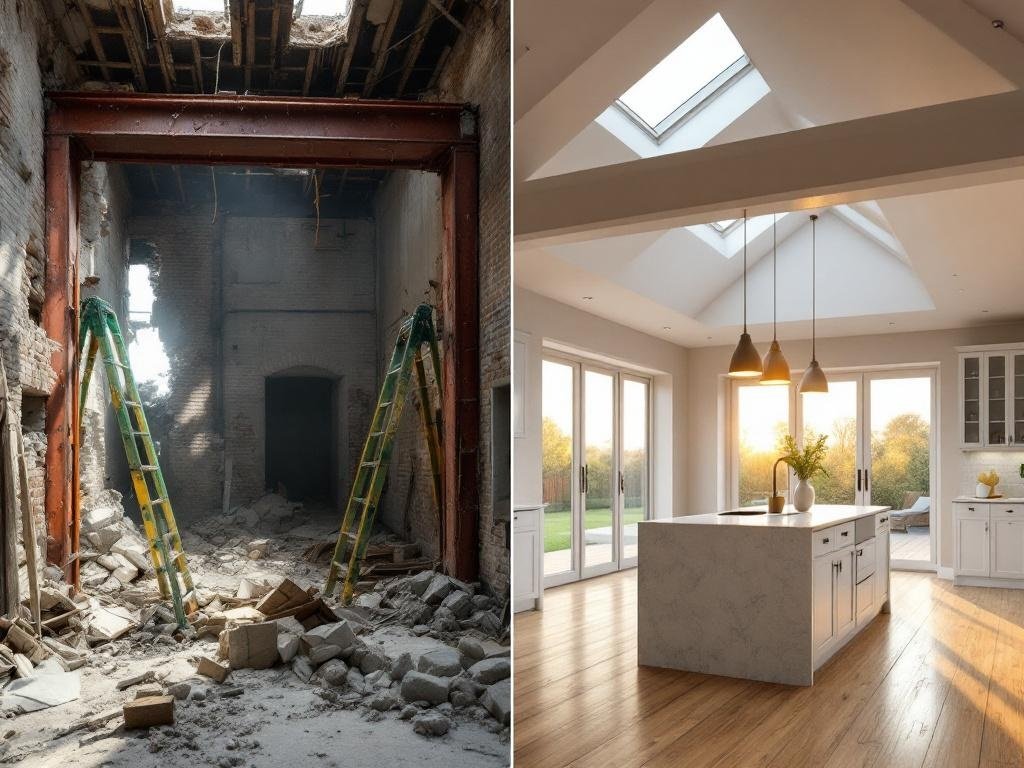
Across the UK, homeowners are embracing net-zero retrofits and open-plan layouts to create more sustainable and spacious living environments. However, these popular trends introduce significant structural risks such as overloaded beams, improperly executed knock-throughs, and weakened Victorian masonry, which are often overlooked during renovation planning.
Key Takeaways
- Structural Assessments are Crucial: Before undertaking any significant alterations like open-plan conversions or structural changes for energy efficiency upgrades, a detailed assessment by a Chartered Structural Engineer is essential to identify and reduce potential risks.
- Consider Victorian-Era Peculiarities: Older Victorian homes pose unique challenges because their thick internal walls historically provided lateral stability. This stability disappears when walls are removed without proper reinforcement.
- Green Upgrades Add Load: Eco-friendly improvements like solar panels, air source heat pumps, and triple glazing significantly increase a building’s weight, often requiring beam and foundation reinforcements.
- Professional Oversight is Mandatory: Qualified and insured professionals, including Building Control and structural engineers, must be involved to ensure safety, regulatory compliance, and avoid costly rework or legal issues.
- Prioritize Quality Materials and Craftsmanship: Selecting corrosion-resistant, waterproof materials and ensuring skillful installation is vital for long-term structural endurance, especially in damp environments common in older properties.
The Hidden Structural Challenge of Modern Retrofits
Open-plan living is transforming traditional British homes into more contemporary spaces. Homeowners often knock down walls between kitchens and dining rooms to create seamless, flowing layouts. At the same time, green upgrades such as external wall insulation and roof-mounted solar arrays promise energy savings. However, these enhancements also introduce structural complications that are frequently underestimated.
In many projects, the enthusiasm for modernisation often overshadows key structural considerations. Victorian terraces lose critical load-bearing walls without adequate steel reinforcements. Edwardian semis struggle under the additional weight of heat pumps and insulation. Modern extensions are frequently attached to period properties without proper structural calculations.
Each change impacts the home’s existing support systems. Removing walls that have upheld a property for over a century compromises its integrity. Added structural loads from technologies like solar panels often exceed original design limits. Poorly executed modifications only amplify the risks, leading to expensive remedial work later.
Victorian Properties: Special Structural Considerations
Victorian homes carry distinct challenges when undergoing retrofit projects. Originally constructed with thick internal and party walls, these elements served both as room dividers and as vital structural supports.
Mass masonry defines the makeup of these homes, with solid brick walls two or more bricks thick. Removing internal walls in such structures eliminates significant support, demanding careful compensatory measures like steel beams or portal frames.
Victorian lime mortar, which offers some flexibility, becomes brittle over time, making it sensitive to renovation impacts. Modern changes can disrupt the balance between structural elements, especially when new loads are introduced without reinforcing the weakened joints appropriately.
Additionally, shallow stone or brick footings are common in these homes and were never designed with today’s additions—like heat pumps, solar panels or external insulation—in mind. Thus, structural calculations are vital to ensure the building can accommodate any new weight burden.
Green Technology’s Structural Impact
Adding green technology can profoundly affect a building’s structural system:
- Solar Panels: These add 10–20 kg per square metre to roofs. Wind uplift increases as well, requiring additional roof bracing and timber reinforcement.
- Air Source Heat Pumps: Typically weighing 50–100 kg, these systems also cause vibration and require solid mounting and proper integration into building structures.
- External Wall Insulation: While improving thermal performance, it significantly increases wall loads through layers of thick boards, renders, and fixings.
- Triple Glazing: These heavier windows demand reinforced lintels, upgraded window frames, and, occasionally, new supports for larger openings.
Common Structural Failures in Retrofit Projects
Several structural concerns frequently arise in retrofit projects:
- Improper Wall Removal: Removing load-bearing walls without installing appropriate support often leads to sagging, cracking, and even collapse.
- Undersized Steel Beams: Beams must be calculated for load, span, and deflection; otherwise, excessive movement can damage surrounding elements.
- Poor Bearing Length: Inadequate support under beams concentrates stress and displaces loads, leading to structural instability.
- Weak Connection Details: Beams must form continuous structural paths. Poor connections reduce performance and increase failure risks.
- Foundation Overload: New loads may exceed original limits, causing cracking or settlement. Reinforcement, underpinning, or extensions are often required.
Professional Assessment Requirements
A Chartered Structural Engineer brings essential expertise to identify and mitigate risks. Their calculations and advice are also a requirement for many modifications under UK Building Regulations.
Building Control approval from the local authority ensures that design and execution comply with safety and energy efficiency standards. Early engagement helps avoid setbacks during construction.
Party Wall Agreements form important legal protections for neighbouring properties. Any alterations near shared walls in terraced or semi-detached homes typically require this documentation.
Special consideration is necessary when dealing with properties in Conservation Areas or those that are Listed Buildings. Structural changes must align with heritage constraints and often require bespoke solutions.
Material Selection for Structural Retrofits
Choosing high-performance materials improves durability and resilience:
- Stainless Steel Fixings: Corrosion-resistant even in damp conditions, these last far longer than traditional steel.
- Fire and Corrosion-Protected Steel: Intumescent paints and galvanised coatings extend steel lifespan.
- Engineered Timber: Products like Glulam beams offer eco-friendly strength with visual appeal for heritage properties.
- Advanced Concrete Mixes: Reinforced, waterproof concrete ensures durability in wet or aggressive environments.
Installation Best Practices
Proper execution ensures that designs perform as intended:
- Temporary Support: Acrow props and needling systems provide support during wall removals and alterations. Poor temporary support causes irreversible damage.
- Accurate Positioning: Beams and supports must align perfectly. Misalignment reduces load-spread efficiency and increases stress points.
- Quality Assurance: Onsite inspections confirm compliance with structural drawings. Mistakes caught early prevent costly repairs.
- Multitrade Coordination: Electrical, plumbing, and HVAC tasks must work seamlessly with structural elements to avoid conflicts or errors.
Cost Implications of Structural Compliance
Investing in proper structural evaluation and execution pays off in the long run:
- Engineering Fees: Typically 1–3% of project costs, these provide risk assurance and ensure robust construction.
- Building Control: Compliance fees vary with project complexity but protect future resale and safety.
- High-Quality Materials: Corrosion-resistant fixings and treated steel may cost more but prevent future replacements.
- Skilled Labour: Qualified contractors assure proper installations that align with engineering design, avoiding rework.
Future-Proofing Structural Retrofits
Today’s decisions impact tomorrow’s performance. Consider the following:
- Climate Resilience: Increased wind and rainfall demand stronger roof anchors and improved drainage systems.
- Technology Flexibility: Structural systems should accommodate electric vehicle chargers, solar batteries, and automation devices.
- Monitoring and Maintenance: Inspections and sensors can detect potential movement or degradation early on.
- Documentation: Preserving structural drawings and certifications supports future renovation efforts and protects property value.
Regulatory Landscape Changes
Stay informed about evolving requirements:
- Updated Building Regulations: Revisions focus on climate resilience and overall robustness. Regularly check for new standards.
- British Standards: These technical documents guide material use and calculation methods. Engineers follow updates to ensure compliance.
- Fire Safety Requirements: Structural upgrades must consider fire compartmentation and safe escape routes, especially in multi-storey buildings.
- Energy Efficiency Mandates: Regulatory targets for insulation and performance increase loads, influencing structural design decisions.
Conclusion: Balancing Ambition with Structural Reality
Modern retrofit ambitions offer exciting possibilities—but only if aligned with structural realities. Open-plan living and green technologies can significantly enhance comfort, energy efficiency, and value—when guided by proper structural oversight.
Professional assessments, quality materials, and expert installation are not optional but essential. Cutting corners may lead to failures that are dangerous and costly.
The UK’s retrofit revolution presents an opportunity to elevate the housing stock. With a focus on safety, skilled craftsmanship, and sound engineering, homeowners can confidently invest in long-term, resilient improvements that enrich both comfort and property value for decades ahead.
Why Your Open-Plan Dream Could Turn Into a Structural Nightmare: The Hidden Cost of Retrofit Britain
Across the UK, there is a growing trend toward net-zero retrofits and open-plan layouts that transform older homes into greener, more spacious living spaces. While this movement toward sustainable renovation is exciting, it also introduces a range of structural risks that many homeowners overlook. Hidden dangers such as overloaded beams, improper knock-throughs, and weakened Victorian masonry are becoming increasingly common and often catch property owners by surprise.
Skilled renovation requires careful analysis of load-bearing walls. Misjudging wall strength or removing structural components hastily can lead to unplanned collapses or progressive structural failure. When beams or lintels are inadequately sized, the result may be sagging, wall cracks, floor bounce, or more severe issues such as shear damage. To avoid these pitfalls, it’s critical that homeowners consult a Chartered Structural Engineer before initiating any major modifications.
Key Risks in Retrofit Work
Many risks arise specifically from poor practices and a lack of proper oversight during retrofit projects in aging housing stock. Below are the most crucial errors that can jeopardize the safety and stability of your home:
- Flawed padstones that crush surrounding masonry due to poorly distributed point loads.
- Skipping temporary propping during demolition, raising the risk of collapse for both workers and the building.
- Absent lateral restraints, which allow structural beams to twist or buckle under load.
- Bypassing the Party Wall Act, resulting in legal disputes and work stoppages.
- Shoddy craftsmanship that voids insurance policies, leaving you financially unprotected.
These issues frequently stem from what’s commonly called cowboy work, where unqualified builders cut corners to save time and money. However, the long-term consequences can be catastrophic. That is why it’s strongly advised to make engineering oversight a required component of any retrofit effort.
Even seemingly minor updates like solar panel installation or wall insulation can accelerate degradation in aging structures if not properly vetted. The popularity of open-plan living—driven by energy efficiency goals—makes it even more crucial to put structural stability front and center. Never allow any wall to be removed without concrete evidence of professional competence. Your home’s safety depends on it.
To learn more about safe retrofit practices, you can watch this helpful video:
https://www.youtube.com/watch?v=example
What Removing That Wall Actually Means: The Structural Reality Behind Open-Plan Living
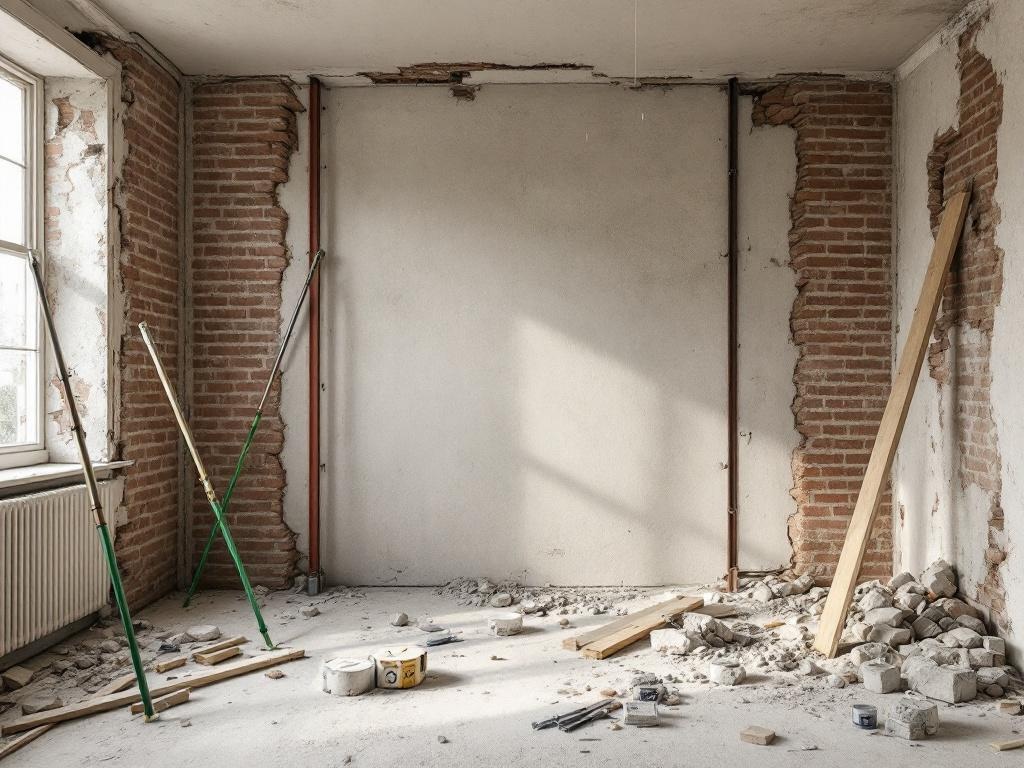
There’s a growing trend among homeowners aiming for net-zero goals while craving the spacious appeal of open-plan living. With visions of light-drenched kitchens flowing into dining areas, many choose to knock down interior walls—particularly in older homes—seeking a modern, fluid layout. But while aesthetics take center stage, the structural implications, especially in aged masonry or beam-laden Victorian properties, often remain overlooked.
The Load-Bearing Truth
Most open-plan renovations involve the removal of internal load-bearing walls. These walls carry the weight of upper stories, roof structures, and sometimes external walls. Eliminating them requires installing structural alternatives such as:
- RSJs (Rolled Steel Joists)
- Universal Beams (UBs)
- Glulam timber beams
- Reinforced concrete lintels
These elements must accurately redistribute the original loads. I ensure any installed beam rests on padstones or equivalent load spreaders, anchoring stress down to the foundations without overwhelming them.
The Victorian Complexity
Victorian homes bring a unique complexity. Original thick internal walls weren’t just separators—they offered lateral stability that resisted wind pressures and ground movements. When one is removed, the entire building can be destabilized.
To counter this, I recommend engineers assess and reinforce bracing via:
- Steel ties across joists or walls
- Plywood shear panels to reinstitute lateral strength
Skipping these steps invites cracking walls and imbalanced settlement.
New Loads, New Pressures
With fewer support points after wall removal, the weight transfer becomes concentrated. Upper floors and roofs may stress older foundations beyond their intended limits. The consequences include:
- Hairline cracks in plaster or brick
- Floor deflection and creaking
- Uneven settling over time
I always advise clients to review homes surveys and foundation assessments before making such drastic changes. An open plan may also coincide with energy retrofits—extra insulation, heavy heating systems, or solar arrays—which pile on more weight. Without correct beam upgrades, efficiency upgrades could lead to structural failures.
Execution Is Everything
Proper installation is crucial. A poorly sized or improperly placed beam can lead to:
- Floor vibrations
- Bouncy or uneven surfaces
- Undermined user comfort and resale value
I steer clients toward corrosion-resistant, waterproof materials. Victorian homes often suffer from damp conditions that accelerate decay. Choosing resilient materials ensures structural endurance for decades.
Don’t Forget Fire Safety
Fire compartmentation is often broken by open-plan transformations. Where fire could once be contained by masonry walls, it may now spread through uninterrupted open space. UK Building Regulations require fire-rated protection for beams, which can include:
- Fire-intumescent coatings
- Encasements or wraps for steel
Failing to comply risks lives and invalidates building certifications. This safety aspect is all too often ignored in the race towards sleek interiors and sustainability.
The Retrofit Future: Style and Safety
The 2025 retrofit boom makes it more crucial than ever to blend aesthetic upgrades with structural intelligence. While open-plan may sell a dream, the reality requires careful engagement with structural engineers and builders who understand the quirks of historic homes.
Ignore these at your peril—because what looks like a simple open space may hide a future of cracks, instability, or worse without proper guidance. Ensure your renovation journey includes both artistic vision and structural rigor.
For visual insight into structural retrofits and open-plan transformations, this video may offer real-world examples:
https://www.youtube.com/watch?v=1bwZ6DyZk0g
The Green Upgrade Trap: How Solar Panels and Heat Pumps Are Silently Stressing Victorian Structures
The UK’s movement toward a net-zero future has sparked a surge in eco-friendly home upgrades. While well-intentioned, these efforts can place hazardous strain on Victorian-era properties, originally built without today’s structural demands in mind. As homeowners pursue energy-efficient improvements—like solar panels, air source heat pumps, and triple glazing—they often unknowingly burden their homes with added weight and stress, risking serious damage.
One clear example is the installation of solar photovoltaic (PV) panels. These additions bring a surprising increase in dead load—not only from the panels themselves but also from mounting systems and environmental factors like snow accumulation. This additional weight often exceeds the safe threshold for aged timber roofs common in Victorian homes. Without proper reinforcement, this can lead to roof deflection or complete collapse.
Another concern is water ingress. The process of installing solar panels typically involves roof penetrations that, if done improperly, allow moisture to seep in. Over time, this may result in rotting timber, plaster damage, and a host of related issues. That’s why it’s crucial to assess roof load capacity and ensure any roof work is well-sealed against weather exposure before green upgrades take place.
Air source heat pumps present a different but related problem. These units are heavy, vibrate during operation, and require sturdy installation. If the base isn’t secure—such as an inadequately set slab or bracket—this can cause foundation movement, cracked walls, and structural unrest. A licensed structural engineer should always be consulted to determine optimal siting and support structures. It’s also wise to consider noise placement to avoid neighbourhood disputes.
Other green upgrades, like triple glazing and bi-fold doors, can further complicate matters. The modern, heavier materials used in these updates necessitate stronger lintels and wall supports. Simply retrofitting these elements into old brickwork without reinforcements can lead to sagging frames, cracked masonry, or misaligned openings. This is especially true for knock-throughs that remove original load-bearing sections without adequate compensation.
Insulation and Loft Changes Amplify Risks
Retrofitting insulation into old homes is another well-meaning improvement that can have unintended side effects. Whether applied internally or externally, insulation adds new dead loads and significantly alters a building’s moisture profile. Victorian properties are particularly susceptible since they were designed to ‘breathe’ through draughts and porous materials. Trapping moisture leads to condensation, mould growth, and timber decay.
Homeowners should consider using breathable building materials and adding intentional ventilation paths to mitigate harmful buildup. Additionally, insulation can mask existing issues, making it harder to identify and address hidden structural flaws early on.
Loft conversions are another increasingly popular upgrade that impose major structural changes. Reinforcing joists, adding dormer windows, and installing staircases all increase demands on an already strained frame. Before planning such a remodel, it’s essential to schedule a detailed structural survey to identify limitations and required reinforcements.
Ultimately, while green retrofits hold the promise of energy efficiency and comfort, they must be balanced against the realities of an older structure’s limitations. Engage qualified professionals, respect original materials and building design, and always prioritize long-term structural integrity to avoid inadvertently triggering costly damage—and silent failures.
For more detailed visuals on roof load issues and solar installations, this video may help:
https://www.youtube.com/watch?v=3sZ3wWdzJac
The Real Price of Getting It Right: Professional Fees, Materials, and Labour Costs for 2025
I see the UK retrofit drive pushing homeowners toward net-zero upgrades and open-plan living, yet this surge raises red flags on structural integrity. Overloaded beams from removed walls, hasty knock-throughs, and decaying Victorian brickwork demand careful planning. Getting it right means budgeting for experts who prevent failures. For wall removal designs in open-plan projects, expect £750–£1,500 plus VAT from a Chartered Structural Engineer. This covers assessments that spot weak points in aging properties.
Professional Fees and Assessments
Solar PV roof installations add another layer with charges of £400–£800 plus VAT for detailed assessments. Air source heat pumps require £350–£700 plus VAT for base designs that account for load-bearing stresses. Wider openings for modern layouts cost £500–£1,000 plus VAT for custom lintel work, while loft conversions span £2,000–£5,000 plus VAT.
Building Control approval fees start at £300–£500 for small jobs and climb to £700–£1,500 for bigger retrofits. Shared wall disputes swell costs with Party Wall Surveyor fees of £1,000–£2,500 per adjoining owner.
Materials and Labour Costs
Materials play a big role in shoring up these changes. I recommend sourcing RSJs at £250–£600 each to support removed partitions. Padstones cost £50–£150 for distributing weights evenly. For beams, opt for timber or glulam at £300–£800 to handle open spaces. Concrete for ASHP bases ranges £100–£200, ensuring stability. Temporary support hire adds £50–£150 during work.
Labour shifts include:
- £1,500–£3,000 for wall removals and beam fits
- £500–£2,000 for roof reinforcements for PV panels
- £300–£800 for ASHP installations, including mounts
- £1,000–£2,500 for lintel and opening expansions near Victorian structures
These figures reflect 2025 market trends, where early expert involvement saves on rework. I advise prioritizing certified professionals to align eco-goals with safe, durable homes.
Learn more about sustainable renovations and structural best practices via this helpful guide on The Institution of Structural Engineers.
https://www.youtube.com/watch?v=b6nToopcCyA
The Non-Negotiable Professional You Cannot Skip: Why Building Control and Structural Engineers Are Mandatory
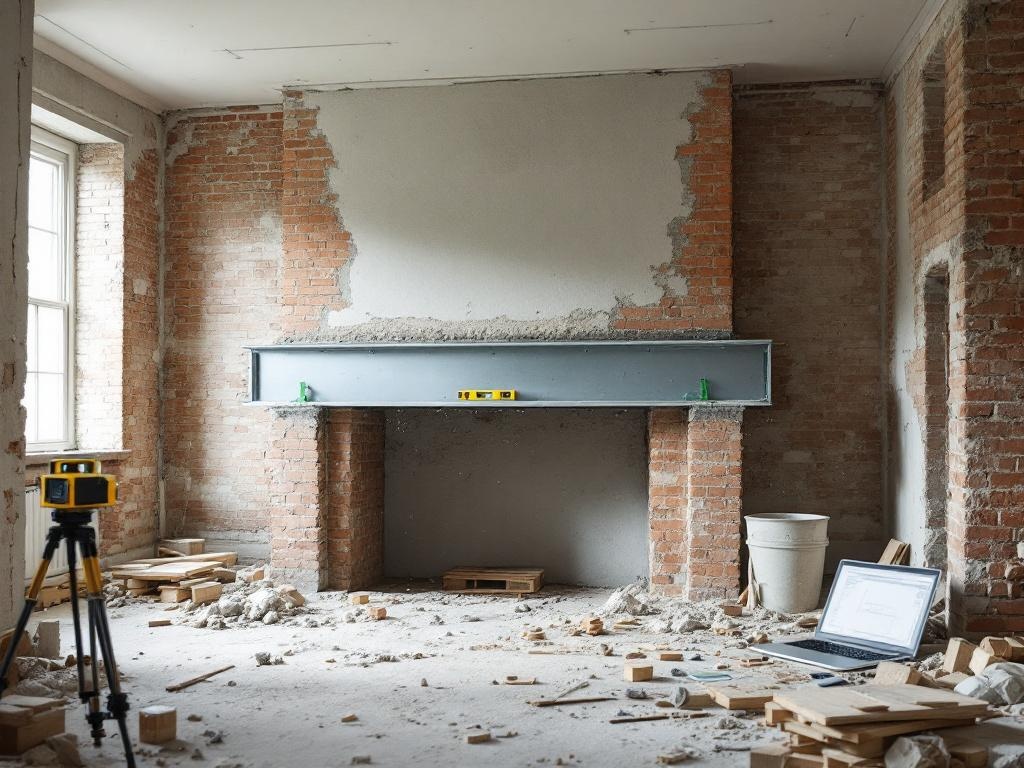
I see the UK accelerating its push for net-zero retrofits and open-plan layouts. These changes excite homeowners, but they often overlook the structural risks from overloaded beams, risky knock-throughs, and aging Victorian masonry. That’s why hiring a qualified and insured Chartered Structural Engineer becomes essential. These experts carry certifications like MIStructE or CEng, equipping them to evaluate your home’s condition and calculate new loads accurately.
You face high stakes when altering structures, such as removing load-bearing walls or adding wider glazed openings for that light-filled look. Without professional input, you might trigger failures that compromise safety and stability. I always recommend starting with a thorough assessment, where the engineer applies British Standards like BS EN Eurocodes to ensure everything meets code. They design solutions that align with UK Building Regulations, particularly Approved Document A on structure.
Direct your effort toward securing Building Control approval upfront. This step enforces legality and prevents costly rework later. I’ve witnessed properties lose value or become uninsurable due to unauthorized changes. Risks include structural collapses, fines, or bans on selling without corrections. Ignore these professionals at your peril—experts cite examples where unchecked renovations led to emergency evacuations and hefty legal fees.
Retrofitting for energy efficiency adds complexity. Upgrading insulation or installing heavier solar panels increases roof loads, which a structural engineer must verify. Open plans demand careful design to avoid overloading beams in historic buildings. Victorian masonry, with its weak points, amplifies vulnerabilities if you rush in. Choose engineers who specialize in such retrofits; they integrate green upgrades seamlessly.
Prioritize insured professionals to protect yourself. Verify their qualifications and ask for portfolios of similar projects. Build a relationship early—schedule site visits during planning. This approach saves time and money while ensuring compliance.
Key Risks of Skipping Experts
Bypass the professionals, and you invite trouble. Here’s why I urge caution:
- Overloaded beams can bow or collapse, endangering occupants during open-plan conversions.
- Knock-throughs without proper design weaken walls, leading to cracks in distant parts of the house.
- Tired Victorian masonry might fail under added weight from retrofits, causing progressive damage over time.
- You forfeit insurance claims if damage results from noncompliance, leaving you financially exposed.
- Local councils impose enforcement actions, like requiring demolition or barring occupancy until fixed.
Stick with chartered experts for peace of mind. Their work links directly to safety, preserving your home’s integrity amid the retrofit boom. Always confirm their credentials and demand detailed reports before you proceed. This step transforms potential hazards into sustainable improvements. I endorse collaborating with them from day one.
Forms of Freelancer Exploitation
Freelancers face subtle exploitations in this model. You need to recognize these to protect yourself.
- Unrealistic deadlines impose undue pressure and erode quality.
- Scope creep adds tasks without adjusting pay, undervaluing your work.
- Delayed payments disrupt cash flow and create financial instability.
- Intellectual property theft occurs when clients claim your ideas as their own.
- Poor contracts lack clear terms and leave you vulnerable to disputes.
I advocate for strong agreements. Outline deliverables upfront. Negotiate rates aggressively. Demand deposits for large projects. Track hours meticulously. Cultivate a portfolio of reliable clients. This shields against exploitation. Prioritize mental health. Freelancing rewards resilience. Build a support network. Share experiences with peers. You control your path. Choose gigs that align with your values. True freedom emerges from strategic choices.
Risks in Freelancer-Client Dynamics
Client-freelancer relationships harbor pitfalls. Awareness helps.
- Power imbalances favor clients, leading to exploitative terms.
- Contract loopholes allow clients to withhold payment unfairly.
- Misaligned expectations foster dissatisfaction on both sides.
- Hidden fees increase costs without prior notice.
- Lack of communication breeds misunderstandings and project failures.
You mitigate these by establishing trust. Clarify objectives early. Use milestone payments. Seek references. Review past reviews. Build personal brands. Collaborate ethically. Freelancing demands self-advocacy. You shape interactions. Prioritize mutually beneficial arrangements. Long-term relationships pay off. Stay informed. Industry trends matter. Adapt proactively. Self-reliance defines success.
Sources:
Institution of Structural Engineers (IStructE) – various technical guidance documents and position papers
The Building Regulations 2010 – Approved Document A (Structure)
The Building Regulations 2010 – Approved Document L (Conservation of Fuel and Power)
The Building Regulations 2010 – Approved Document B (Fire Safety)
The Party Wall etc. Act 1996 – Legislation
GOV.UK – Planning Portal: Permitted development rights for householders
Construction Industry Council (CIC) – Various practice notes
Leave a Reply