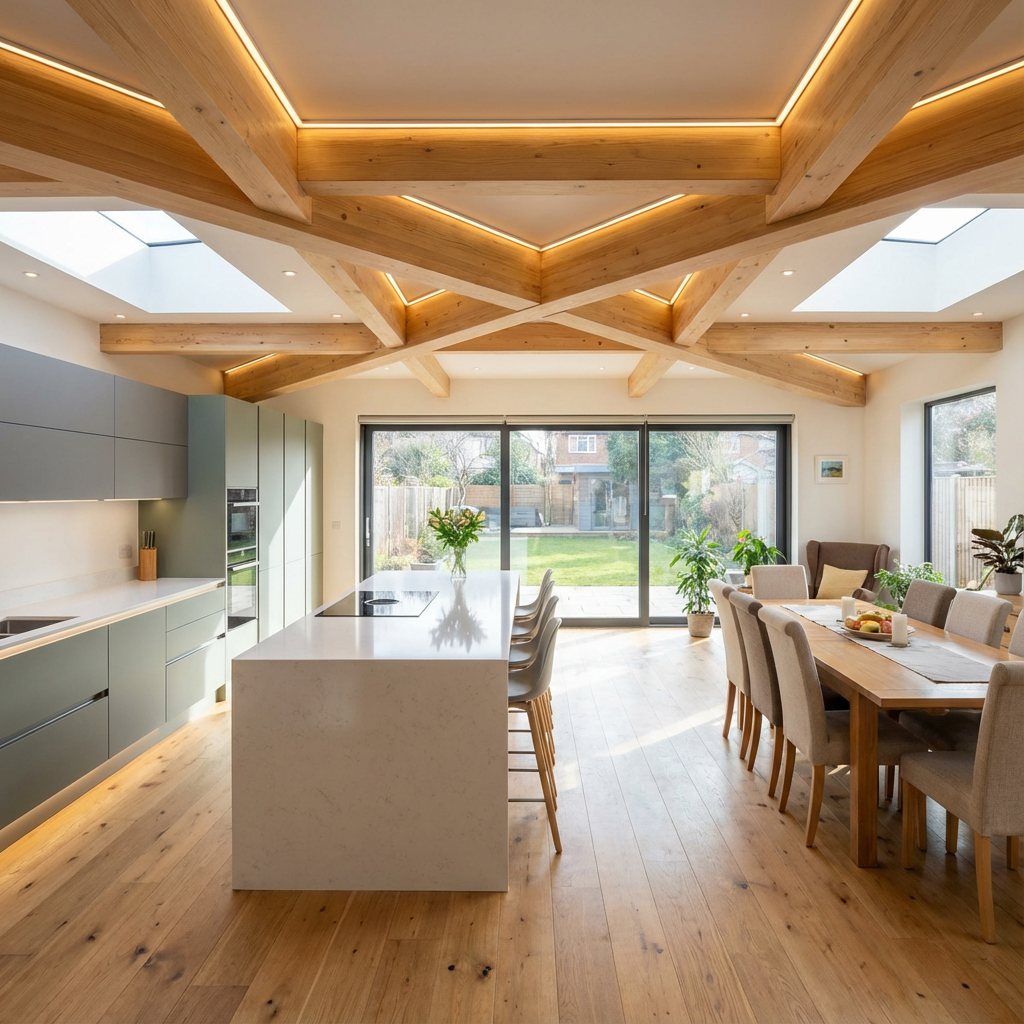
Engineers often recommend alternatives to standard RSJs (Universal Beams) when concerns arise about appearance, expenses, or construction disruption. They examine options including flitch beams, steel frames, and concealed solutions. Choosing the optimal structural solution demands careful evaluation of load requirements, site constraints, and budget parameters to achieve both safety and visual appeal.
Key Takeaways
- RSJs (Universal Beams) excel in strength and large spans: They provide reliable support, particularly in garages or extensions, but can impact visual appeal.
- Flitch beams offer a cost-effective and aesthetically integrated solution: Combining steel and wood, they create a good compromise for residential renovations with moderate loads.
- Steel frames provide flexibility for open-plan designs: Suited for commercial buildings and modern constructions, they offer strength and speed of installation, but may have a more industrial appearance.
- Concealed solutions minimize visual impact: Perfect for historic homes or tight spaces, these options prioritize preserving original facades while demanding precise placement and calculations.
- Professional engineering oversight remains crucial for code compliance and safety: Employing a Chartered Structural Engineer proves essential to guarantee structural integrity and avoid costly errors and legal issues.
When Your Engineer Says “No” to a Standard RSJ: Understanding All Your Structural Options
I define a standard RSJ as the rolled steel joist familiar in UK construction, now formally known as a Universal Beam (UB) or Universal Column (UC). These hot-rolled steel sections feature an I or H cross-section to handle loads efficiently. Universal Beams boast a depth greater than their width, excelling in bending resistance. Universal Columns, with their squarer profiles, manage axial compression alongside bending.
Their high strength-to-weight ratio lets you span large openings with slim profiles. Fabricators cut, drill, and add end plates or primer paint easily. They meet standards like EN 10025 and carry CE Marking for reliability. Expect supply costs for common sizes—like 203×102 UB at 23kg/m or 254×102 UB at 28kg/m—to range from £60 to £120 per meter. Add £20 to £30 per meter for fabrication. Fire protection, such as intumescent paint, bumps that up by £20 to £50 per meter for a 60-minute rating.
Engineers recommend alternatives when an RSJ disrupts aesthetics or adds unnecessary cost. Flitch beams combine steel plates with wood, blending the two materials for residential renovations. They work well structurally where loads are moderate and you avoid full steel exposure. Aesthetically, they hide within existing timber frames, reducing visual intrusion. Costs often stay low at £50 to £100 per meter, with minimal disruption during installation.
Steel frames offer greater flexibility for open-plan designs in modern builds. They assemble quickly onsite, handling heavy loads better than wood alone. Choose them for commercial spaces needing longevity and high capacity. Aesthetically, they provide a clean, industrial look when exposed. Various sizes keep expenses between £80 and £150 per meter, though on-site welding increases labor and potential dust.
Concealed solutions, such as embedded concrete or timber trusses, suit tight spaces or historic homes. They maintain original facades without visible changes. Structurally, they cope with similar bending stresses but demand precise placement. Costs dip to £40 to £90 per meter, with low disruption as installations occur behind walls. I pick the option based on load requirements and site constraints.
Key Alternatives at a Glance
- Flitch beams suit moderate loads in homes, blending with wood for subtle integration at lower costs.
- Steel frames excel in commercial settings, offering strength and speed with a modern visual appeal.
- Concealed solutions preserve original aesthetics in sensitive buildings, minimizing changes and expenses.
Engineered Timber Solutions: When Wood Outperforms Steel
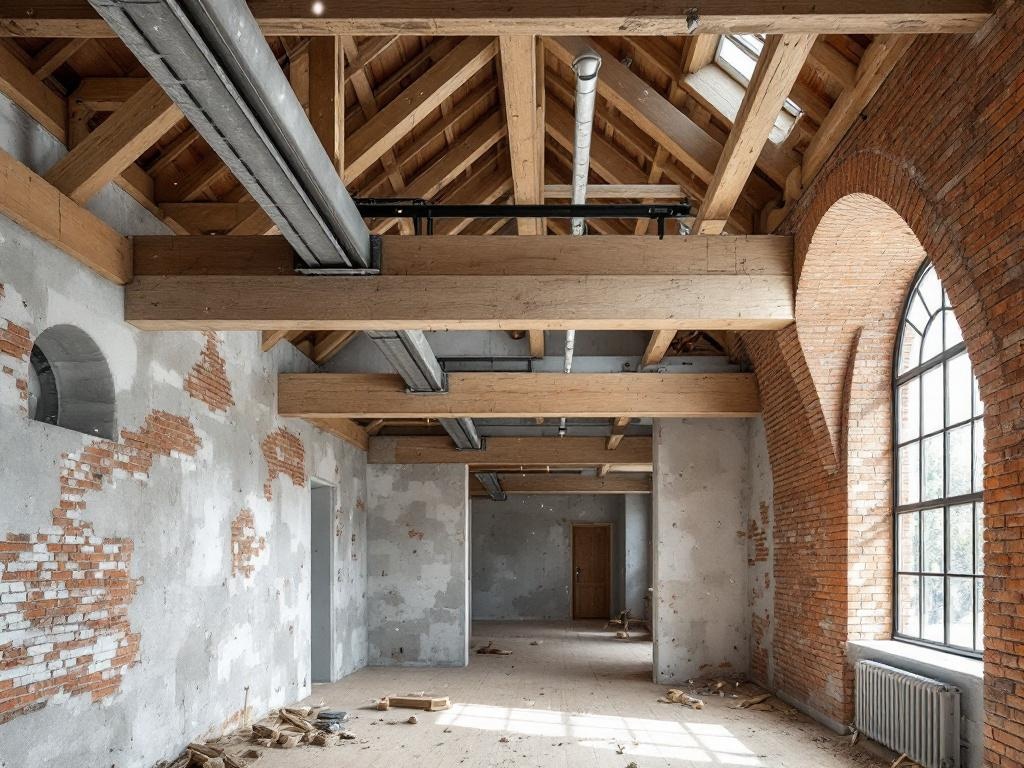
In home openings or extensions, standard RSJ setups demand deep beams that cut into usable space, yet engineered timber options like solid graded timber often shine for shorter spans under lighter loads. I recommend graded timber such as C16 or C24 for these scenarios because it proves economical and straightforward to install, though plan for fire protection like encasement on exposed faces to meet BS EN 1995 standards. Structurally, this timber handles the basics without fuss, but aesthetically, it blends well in rustic settings where exposed wood appeals, and costs stay low compared to rolling out steel frames. Disrupting existing structures during fitting keeps to a minimum, as you can route wiring through without much hassle.
When spans extend further and loads grow heavier, turn to glued laminated timber, or glulam, for a step up in performance. This material layers timber with adhesives, letting engineers shape long or even curved supports that steel struggles with aesthetically. Glulam delivers high strength suitable for beams in loft conversions, for instance, and its natural charring in fires provides solid resistance without additional coatings in many cases. Price it at £80 to £180 per meter, which often undercuts steel RSJs for similar support, especially in spaces valuing warmth over cold metal. I suggest it for renovations where disruption matters; prefabrication outside the site reduces on-site mess, contrasting with the heft of crane-lifting flitch beams.
LVL and I-Joist Alternatives for Modern Builds
Laminated veneer lumber, or LVL, brings directional strength from its veneered setup, making it ideal for consistent lintels over windows or as floor joists in new builds. I opt for LVL when dimensional stability counts more than sheer scale, given its £50 to £100 per meter range that competes with hidden steel core options but avoids the thermal bridging issues of uninsulated RSJs. Structures benefit from LVL’s reliability under controlled loads, and aesthetically, it hides well in floors, offering a concealed solution versus exposed rolled steel.
For low-weight spans, I-Joists with their OSB or plywood cores and timber flanges work wonders in slim profiles, integrating services like pipes easily. These joists span long distances efficiently, rivaling steel frames in cost for labor—though fitting proves simpler without welding equipment.
Choose them for energy-efficient homes where minimizing material weighs structural and aesthetic priorities:
- They disrupt less than framing out with heavy beams.
- They often make sense in projects favoring sustainability.
- They use renewable resources.
- They meet fire regulations through design.
I advise assessing site access early; tight spots favor timber over bulky alternatives. Always verify specs against BS EN 1995 for confidence in load-bearing assurances.
https://www.youtube.com/watch?v=5ipuN6U8Fi4
Concrete and Composite Alternatives: Heavy-Duty Solutions for Complex Loads
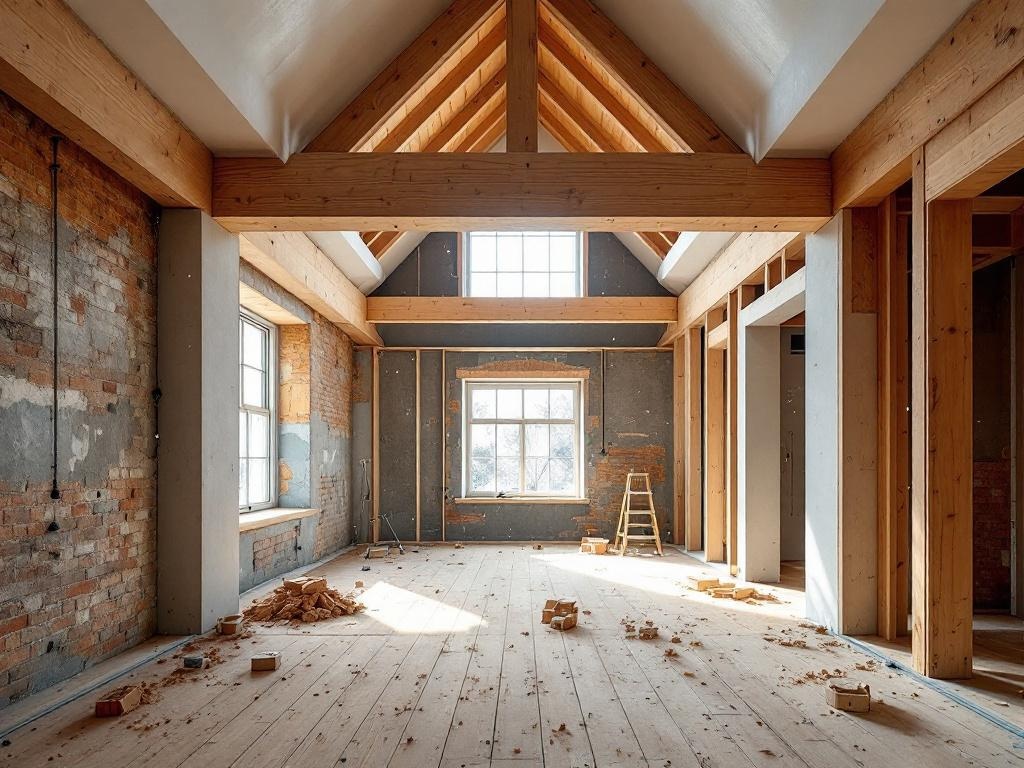
When your engineer recommends concrete or composite options over standard RSJs for bearing heavy loads, consider how these alternatives balance strength with installation ease. Unlike RSJs, which excel in simple spans but may disrupt interiors with their visibility, precast concrete elements offer discreet support without extensive site work.
Precast and Reinforced Choices
Precast concrete lintels or beams arrive factory-made and prestressed, speeding up installation while providing superior fire resistance compared to steel RSJs. They suit straightforward applications but limit custom sizing to stock options. Expect costs around £30 to £80 per meter, making them economical for non-complex openings. I often suggest them in residential extensions where minimal disruption matters more than aesthetic tweaks.
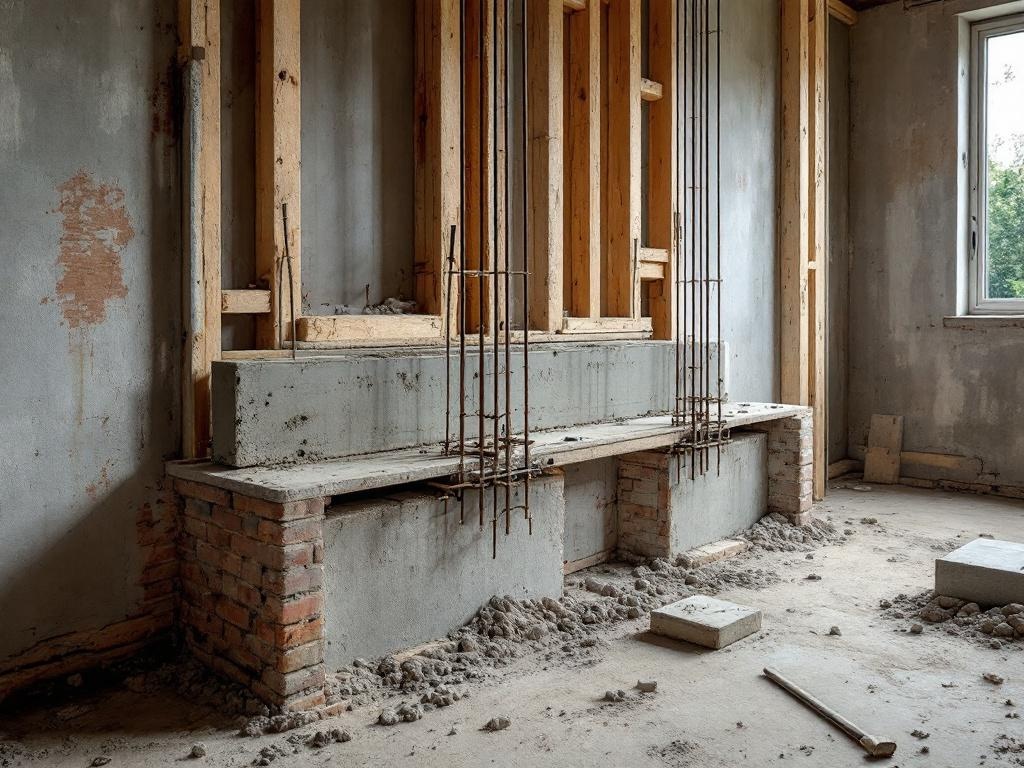
For more customization, RC beams poured in-situ around steel rebar cages handle irregular shapes and deliver high strength. Yet, their labour-intensive formwork needs push costs and time up. They shine in renovations demanding exact fits, outperforming RSJs aesthetically by concealing reinforcement. I recommend them when load distribution requires flexibility beyond what flitch beams can offer.
Composite Innovations for Efficiency
Composite beams merge steel with concrete slabs via shear studs, creating synergy that boosts load capacity and stiffness over RSJs. According to BS EN 1992 guidelines, this composite action resists deflection in commercial or heavy residential structures. Installation involves welding studs, which reduces disruption versus replacing entire frames.
In such scenarios, precast concrete padstones distribute beam loads effectively, costing £15 to £40 each. Position them under supports to ensure even pressure. Compared to concealed solutions like steel frames, composites cut costs where spans exceed RSJ limits while maintaining a clean look. Choose them for warehouse-like projects needing rugged reliability without exposing beams overtly.
These options often edge out RSJs structurally in multi-story builds, but weigh aesthetics and budget carefully. I advocate for precast where speed and fire safety drive decisions, opting for composites in larger loads to avoid over-engineering with basic steel. Test a mock-up first to visualize the impact.
The True Cost of Getting It Right: Professional Fees, Materials and Installation
As an engineer, I factor in every expense when recommending structural solutions like RSJs. Professional fees form the foundation of any project, ensuring compliance and safety.
Professional Fees Breakdown
I always advise clients to budget for Chartered Structural Engineer costs, which average £600 to £1,500 plus VAT for a single beam design, according to MIStructE guidelines. More intricate setups, such as multi-beam configurations, push fees toward £1,500 to £3,000 or more plus VAT. Site visits for inspections add £150 to £300 plus VAT per visit, catching potential issues early.
Building Control applications bring extra costs, with plan checking and inspections ranging from £200 to £400. If adjoining walls fall under the Party Wall Act 1996, I recommend engaging a Party Wall Surveyor. Fees for each adjoining owner typically run £1,000 to £2,500 plus VAT, leading to a Party Wall Award that prevents disputes. I prioritize these to avoid delays and ensure smooth approvals.
Materials, Installation, and Overall Budget
Materials like a modest 3m steel beam demand £1,000 to £2,500 plus VAT for supply, covering grade-appropriate steel. Complex installations requiring cranes or lifting equipment escalate to £2,500 to £5,000 plus VAT, reflecting labour and equipment needs. Skilled labour plays a key role; I select crews experienced with precision to minimize errors.
Temporary works, such as Acrow props rented at £5 to £15 per week, support structures during changes. Strongboys provide additional stability at similar rates. For a typical project, I estimate total costs between £3,000 and £6,000 plus VAT, excluding Party Wall expenses. This keeps projects on track without unnecessary overruns.
When choosing RSJs versus alternatives, I weigh these costs against structural needs. Flitch beams or steel frames might reduce fees for simpler jobs, but RSJs excel in strength and longevity. I recommend prioritizing long-term savings over short-term cuts to maintain integrity.
What Goes Wrong When You Skip the Engineer: Critical Failures and Legal Consequences
Avoiding Structural Pitfalls
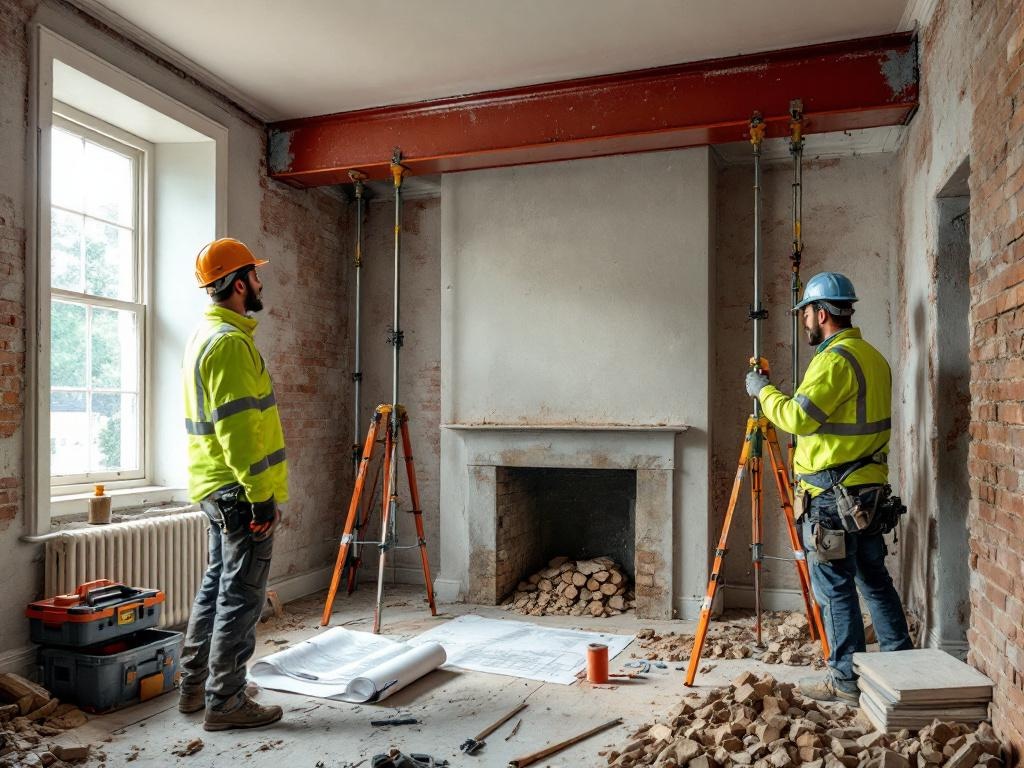
Structural failures often stem from DIY attempts to replace RSJs without expert input. I notice excessive deflection first, where beams sag under weight, causing cracked plaster or bouncing floors that signal weak support. This deflection exceeds limits in BS EN 1990, compromising safety and aesthetics.
Masonry cracking near beam bearings points to uneven loads pushing walls apart, a common issue I address by ensuring proper bearing designs. Catastrophic collapse lurks when loads overwhelm a beam, while crushing of masonry under beams indicates concentrated stress without adequate padstones.
Beam end loads can overload foundations, leading to settlement and widespread damage like differential settlement fracturing your home. Improper temporary support, such as misusing Acrow props or removing them before mortar sets, invites immediate collapse, as outlined in BS 5975.
Missing lateral restraint allows lateral torsional buckling or twisting, destabilizing the entire frame. Correct connections prevent these, but poor ones accelerate failure. Finally, unprotected steel weakens fast in fire, losing strength without intumescent paint or fire board meeting Approved Document B standards. These risks demand engineered precision.
Legal Ramifications
Skipping an engineer doesn’t just invite structural woes—it drags in legal hassles.
All alterations must comply with the Building Regulations 2010, so unauthorized work halts property sales and requires costly retrospective approval from local authorities, per Approved Document A. Non-compliance exposes you to fines or forced demolitions.
The Party Wall Act 1996 governs shared walls, and failing to serve notices sparks disputes, legal battles, and hefty compensation claims. I always advise early consultation to avoid these traps, ensuring your project stays safe and lawful while saving you time and funds.
The Beam Doctor Verdict: Non-Negotiable Rules for Any Structural Opening
I always stress that engineers start by classifying all structural openings as ‘building work’ under the Building Regulations 2010, particularly Approved Document A, which demands professional design for safety and load-bearing needs. This classification applies whether you’re installing a standard RSJ, a flitch beam, steel frames, or even concealed solutions like load-bearing stud walls.
Each option must support the structure fully, but RSJs excel in straightforward spans with high load capacity, making them ideal for garages or extensions where strength trumps other factors. Alternatives like flitch beams blend steel and timber for a cost-effective middle ground, plus they offer better aesthetic integration in period homes without visible metalwork. Steel frames suit larger projects, providing open plans with minimal disruption during installation, though they often cost more upfront. Concealed solutions shine aesthetically, hiding beams behind plasterboards, but they demand precise calculations to avoid weakness in earthquake-prone areas or high-wind zones.
Why Professional Oversight Trumps Guessing
I recommend using only a Chartered Structural Engineer accredited by MIStructE to avoid mishaps that compromise everything from structural integrity to resale value. Builders might eyeball beam sizes, but that leads to failures I see too often—cracks, sagging floors, or worse, collapses.
RSJs need thick, CE-marked steel to meet Eurocodes, ensuring they handle bending and shear forces reliably. Flitch beams require verified engineered timber, sourced with documentation checked, to prevent rot or warping over time. Steel frames demand welding expertise and inspection, while concealed methods like reinforced concrete hidden beams call for airtight moisture barriers.
Always secure full Building Control approval before starting, as this legal step verifies your design against local standards, saving headaches during updates or sales. I design based on British Standards, providing full calculations and drawings so homeowners grasp how choices like a slender RSJ reduce costs but increase vibration risks versus a sturdier alternative.
Integrating Choices for Optimal Results
Cost and disruption vary with each approach, so I balance them against structural needs.
- Standard RSJs disrupt less in exposed installations but affect aesthetics in modern interiors.
- Flitch beams cut costs by 20-30% over pure RSJs, as per typical quotes, and suit DIY enthusiasts with expert guidance on hybrid assembly.
- Steel frames bring cost benefits for multi-span layouts, minimizing site time.
- Concealed tubes use less material but raise installation complexity and expenses.
Alteration disruption ranks high—RSJs need clear access for cranes, while concealed options allow drilling and patching with noise control. Aesthetically, I prefer flitch or concealed solutions for seamless looks in living spaces. Structurally, RSJs dominate in steel-heavy builds, but verify every component’s CE marking to dodge liability issues.
Practical Advice for Smart Selections
I advise clients to prioritize load analysis first, calculating dead loads from floors and live loads from occupants before picking a beam.
- Factor in spans—RSJs handle up to 6 meters efficiently, but flitch beams stretch to 8 meters at lower cost.
- Aesthetic preferences matter too; choose concealed solutions for open kitchens where beams might detract.
- Disruptions during installation drop with flitch beams thanks to easier handling.
- Budget wisely—RSJs save on labor but inflate material costs versus timber-steel combos.
No shortcuts—hiring a MIStructE engineer guarantees compliance and peace of mind. Follow these rules, and your structural opening won’t just pass regs; it’ll perform for years.
Sources:
The Building Regulations 2010 (as amended) – Approved Document A: Structure
The Building Regulations 2010 (as amended) – Approved Document B: Fire Safety
The Party Wall etc. Act 1996
BS EN 1990: Eurocode – Basis of structural design
BS EN 1991: Eurocode 1 – Actions on structures
BS EN 1992: Eurocode 2 – Design of concrete structures
BS EN 1993: Eurocode 3 – Design of steel structures
BS EN 1995: Eurocode 5 – Design of timber structures
BS 5975: Code of practice for temporary works procedures and the permissible stress design of falsework
Institution of Structural Engineers (IStructE) – “Structural Engineering of Low-Rise Buildings”
Steel Construction Institute (SCI) – “P363 Steel Building Design: Design Data”
TRADA (Timber Research and Development Association) – Various design guides for timber construction
Leave a Reply